Sights

3,246 questions

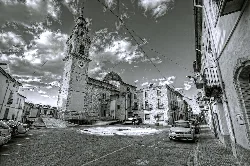
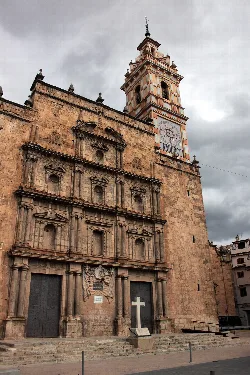
Stone church facade with tower and clock in Chelva.
ChelvaValencia

What is the significance of the Iglesia de Nuestra Señora de los Ángeles?

The Iglesia de Nuestra Señora de los Ángeles is one of Chelva's most important landmarks. Its construction began in 1626 and was completed in 1692. The church is celebrated for its Baroque architecture and houses a rich artistic heritage, including works from the 17th century.
Iglesia de Nuestra Señora de los Ángeles For visitors ›

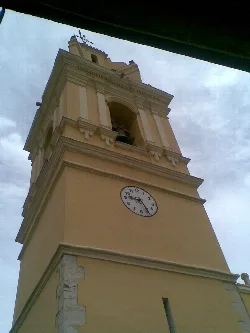
Bell tower with clock and bell in Alfarb.
AlfarbValencia

What is the Campanar de l'església Sant Jaume Apòstol d'Alfarb?

The Campanar de l'església Sant Jaume Apòstol d'Alfarb is the bell tower of the church dedicated to Saint James the Apostle. This 18th-century structure has undergone restorations, including significant work in 2003. It stands out for its historical significance and architectural style, reflecting the local culture and religious heritage.

Campanar de l'església Sant Jaume Apòstol For visitors ›

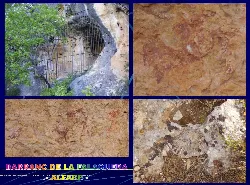
Rock shelter with cave paintings in Alfarp, Valencia.
AlfarbValencia

What are the paintings in the Barranco de la Falaguera?

The Barranco de la Falaguera is home to Levantine rock paintings, discovered in the early 1980s. These artworks depict naturalistic scenes, primarily featuring deer, and are significant examples of prehistoric art. The site was declared a UNESCO World Heritage site in 1998, highlighting its cultural importance.

Barranco de la Falaguera For visitors ›

Bell tower with clock and bell in Alfarb.
AlfarbValencia

What is the significance of the church San Jaime Apóstol?

The church San Jaime Apóstol, built in the 18th century, is significant as it stands on the site of an earlier church dedicated to Santa María. It features various artistic elements, including sculptures of San Jaime, and has been restored multiple times, reflecting the community's dedication to preserving its heritage.

Iglesia San Jaime Apóstol For visitors ›

Main square with church and clock tower in Montaberner.
MontavernerValencia

What can I see at Plaça Major Montaverner?

Plaça Major Montaverner is a central square that features the town's church and offers a glimpse into local life. It's a great spot for socializing and enjoying the surrounding architecture, including the neoclassical church dedicated to San Jaime and San Juan Evangelista. The square often hosts community events and is a hub for residents and visitors alike.

Plaça Major Montaverner For visitors ›

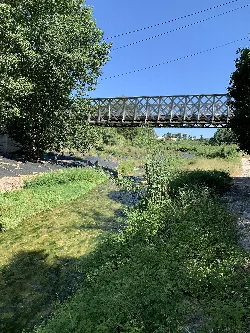
Albaida river with a wooden bridge and surrounding vegetation.
MontavernerValencia

What is the 'pont curt' in Montaverner?

The 'pont curt' is a historic iron bridge that spans the Albaida River, built in 1890. It is part of the town's infrastructure and represents the engineering of the 19th century. The bridge, along with the 'pont llarg', serves as a vital connection for residents and visitors traveling through the area.

pont curt For visitors ›

MontavernerValencia

What is the church in Montaverner like?

The church in Montaverner, dedicated to San Jaime and San Juan Evangelista, was constructed between 1735 and 1758. It features a neoclassical style and retains historical elements, including a Roman column at the entrance. The church is a significant landmark and serves as a center for local religious activities.

For visitors ›

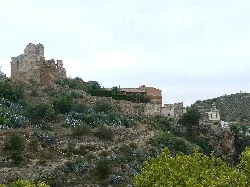
Ruins of a castle on a hill with vegetation and houses.
BolbaiteValencia

What is the Castillo de Bolbaite?

The Castillo de Bolbaite is a historical castle built in the 16th century, situated on a hill overlooking the village. It was constructed on the remains of an earlier Islamic fortress and served as a residence and symbol of power for local nobility.

Castillo de Bolbaite For visitors ›

BolbaiteValencia

What is the significance of the Ermita de Santa Bárbara?

The Ermita de Santa Bárbara is a chapel located on a nearby hill, offering stunning views of the La Canal de Navarrés valley. It's a popular spot for locals, especially during the first weekend of December when the town celebrates its patron saint.

Ermita de Santa Bárbara For visitors ›

BolbaiteValencia

What is the Rabalet in Bolbaite?

The Rabalet is the historic district of Bolbaite, characterized by narrow streets that wind around the Castillo de Bolbaite and lead to the central square, where the church of San Francisco de Paula and the town hall are located.

Rabalet For visitors ›

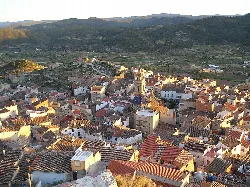
Aerial view of a town with narrow streets, red roofs, and mountains in the background.
TuéjarValencia

What can you tell me about the aerial view of Tuéjar?

The aerial view of Tuéjar showcases its picturesque layout nestled among the mountains of the Ibérica range. The town features a mix of traditional whitewashed buildings and more modern structures, surrounded by lush greenery and agricultural land. The surrounding landscape is characterized by rolling hills and valleys, making it visually appealing and a great spot for photography.

For visitors ›

Church tower and dome in Tuéjar with mountains in the background.
TuéjarValencia

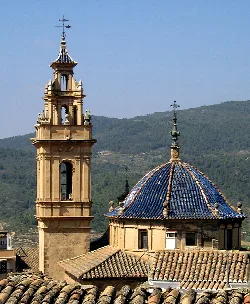
What are the notable features of the Iglesia de Nuestra Señora de Los Ángeles?

The Iglesia de Nuestra Señora de Los Ángeles is a Baroque church built in the late 17th century. Its striking façade features two fluted columns supporting a cornice, and a beautiful bell tower in neoclassical style. Inside, the church has a vaulted ceiling supported by buttresses, with chapels and an octagonal drum leading to the dome, reflecting Italian architectural influences.

Iglesia de Nuestra Señora de Los Ángeles For visitors ›

TuéjarValencia

What can I find in the historical neighborhoods of Tuéjar?

The historical neighborhoods of Tuéjar, such as la Zacuca and el Portillo, feature narrow, winding streets with a distinctive Arabic influence. Visitors can explore charming plazas, old fountains, and an ancient oven. The architecture showcases traditional white facades, providing a glimpse into the town's rich cultural heritage and history.

For visitors ›

CamporroblesValencia

What can I see in Camporrobles?

In Camporrobles, visitors can explore the archaeological site of El Molón, showcasing Iberian and Andalusian history, and the 18th-century Church of Nuestra Señora de la Asunción. The town also features the Municipal Museum Raúl Gómez, which houses archaeological finds and local artworks, providing a glimpse into the area's cultural heritage.

For visitors ›

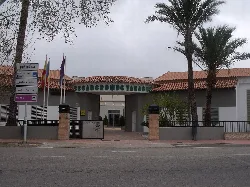
Town hall building with palm trees and signage at the entrance.
Rotglà i CorberàValencia

What is the white building on the hill in Rotglà i Corberà?

The white building on the hill is likely the Ayuntamiento, or town hall, of Rotglà i Corberà. This structure serves as the administrative center for the municipality, reflecting the town's local governance and community activities, and is an important landmark for residents and visitors.

Ayuntamiento For visitors ›

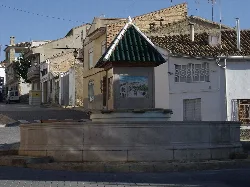
Fountain with altarpieces in Venta del Moro, Valencia.
Venta del MoroValencia

What can you tell me about the Fuente con retablos de las fiestas de Venta del Moro?

The Fuente con retablos is a notable fountain in Venta del Moro that features decorative panels celebrating local festivals. It serves as a community gathering point and is a representation of the town's cultural heritage. The fountain not only provides water but also showcases the artistic expression related to the traditions and festivities of the area.

For visitors ›

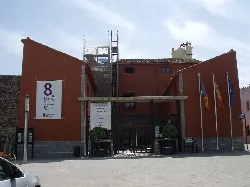
Potríes town hall with flags and a 8th March banner.
PotriesValencia

What is the Ayuntamiento de Potríes?

The Ayuntamiento de Potríes is a notable example of 17th-century rural architecture in the Valencian Community. It was established as the municipal hall after the demolition of the old town hall and school in the late 19th century. The building now houses the town's administrative offices and serves as a historical landmark.

Ayuntamiento de Potríes For visitors ›

PotriesValencia

Are there any historical sites in Potríes?

Yes, Potríes is home to various historical sites, including the Church of Santos Juanes, which features a Latin cross layout and houses a relic of San Blas. The town also has remnants of its medieval past, such as the old walls and traditional rural architecture.

For visitors ›

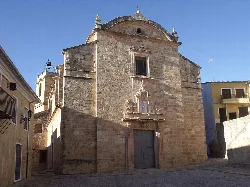
Stone church facade with balcony and large door in Montesa.
MontesaValencia

What is the significance of the Iglesia de la Asunción?

The Iglesia de la Asunción, constructed between 1693 and 1702, is a key religious site in Montesa. Designed by mosén Juan Aparicio, it features a stone façade and a remarkable Baroque altarpiece. Inside, visitors can find 16th-century retables and a historic organ from 1744, making it a notable landmark for both locals and tourists.

Iglesia de la Asunción For visitors ›

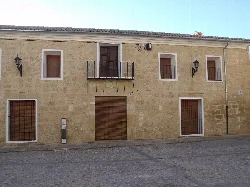
Stone building with barred windows and doors in Montesa.
MontesaValencia

What is the Casa Abadía?

The Casa Abadía is a historic building in Montesa that serves as a reminder of the town's past. It is located near the main square and has been part of the town's architectural heritage. The building reflects the local style and adds to the charm of Montesa, making it a point of interest for visitors exploring the area.

Casa Abadía For visitors ›

MontesaValencia

What is the significance of the Ermita de la Santa Cruz?

The Ermita de la Santa Cruz is a simple yet significant structure from the 16th century, located on a hilltop. Its elevated position offers stunning views of the Montesa valley. The chapel is a place of worship and reflection for locals, contributing to the town's cultural and spiritual heritage.

Ermita de la Santa Cruz For visitors ›

AdemuzValencia

What are the main attractions in Ademuz?

Ademuz offers several attractions, including the historic Castillo de Ademuz, which provides stunning views and a glimpse into the area's medieval past. The Ermita de Nuestra Señora de la Huerta is another highlight, showcasing beautiful Gothic architecture. Additionally, the lush landscape around the river Turia and the nearby Área Recreativa Los Arenales offer opportunities for nature lovers and outdoor activities.

For visitors ›

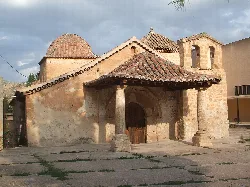
Small church with tiled roofs and columns in Ademuz.
AdemuzValencia

What can you tell me about the Ermita de Nuestra Señora de la Huerta?

The Ermita de Nuestra Señora de la Huerta is the oldest building in Ademuz, dating back to the 14th century. It features a Gothic style with a notable porch supported by columns and a Romanesque-style entrance. The interior houses beautiful murals, including a depiction of Mary Magdalene, making it a significant cultural and historical site.

Ermita de Nuestra Señora de la Huerta For visitors ›

L'ÈnovaValencia

What is the church dedicated to in L'Ènova?

The main church in L'Ènova is dedicated to the Virgen de Gracia. It was originally a mosque and was converted into a church during the reign of Jaume I. The church features a notable image of the Virgin made of polychrome marble.

Iglesia parroquial For visitors ›