Sights

3,246 questions

AbrucenaAlmería

What can you tell me about the Ermita de San José?

The Ermita de San José is a charming chapel located in Abrucena. It features a simple design typical of the region and is an important site for local religious events. The chapel is often visited by residents during festivities, particularly those related to San José, which is celebrated on March 19 each year.
Ermita de San José For visitors ›

Cuevas del AlmanzoraAlmería

What are the main attractions in Cuevas del Almanzora?

Cuevas del Almanzora features several notable attractions, including the Castillo del Marqués de los Vélez, a Gothic-style fortress, and the Iglesia de Nuestra Señora de la Encarnación, a beautiful 18th-century church. Additionally, the Palacete de Torcuato Soler Bolea serves as the town hall and showcases neoclassical architecture. The area is rich in archaeological sites, like Baria and Fuente Álamo, reflecting its historical significance.

For visitors ›

Cuevas del AlmanzoraAlmería

What is the significance of the Castillo del Marqués de los Vélez?

The Castillo del Marqués de los Vélez is a historic Gothic-style fortress built in the 16th century by Pedro Fajardo, the first Marquis of Vélez. It dominates the landscape and includes various structures like the Torre del Homenaje and several museums, showcasing the town's rich history and cultural heritage.

Castillo del Marqués de los Vélez For visitors ›

Cuevas del AlmanzoraAlmería

What archaeological sites are worth visiting in Cuevas del Almanzora?

Several archaeological sites in Cuevas del Almanzora are significant, including the Yacimiento arqueológico de Baria, which has been inhabited since the 8th century BC, and the sites at Almizaraque and Fuente Álamo, showcasing the region's rich cultural history from the Bronze Age to the Islamic period.

For visitors ›

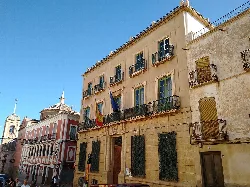
Classic style building with flags and iron balconies in Cuevas del Almanzora.
Cuevas del AlmanzoraAlmería

What is the Palacete de Torcuato Soler Bolea?

The Palacete de Torcuato Soler Bolea is a neoclassical building that currently serves as the town hall of Cuevas del Almanzora. It reflects the architectural style of the 19th century and stands as a testament to the town's historical significance and development during the mining boom.

Palacete de Torcuato Soler Bolea For visitors ›

HuécijaAlmería

What can you tell me about the Convento de los Agustinos in Huécija?

The Convento de los Agustinos, founded in 1511 by Doña Teresa Enríquez, is a significant Baroque monument in Huécija. It was declared a cultural heritage site in 1992. The convent has a rich history, suffering damage during the 1568 Morisco rebellion and the Spanish Civil War. Currently, it is undergoing restoration to preserve its architectural beauty and historical significance.

Convento de los Agustinos For visitors ›

HuécijaAlmería

What are the main historical sites in Huécija?

Key historical sites in Huécija include the Convento de los Agustinos and the Iglesia de la Anunciación, both showcasing impressive architectural styles. The remnants of the Castillo de Marchena on Cerro de Marchena also highlight the area's rich history, dating back to the Muslim period.

For visitors ›

Lucainena de las TorresAlmería

What is Lucainena de las Torres known for?

Lucainena de las Torres is known for its rich history, beautiful landscapes, and cultural heritage. It is part of the network of 'Los pueblos más bonitos de España' and features notable landmarks like the Iglesia Nuestra Señora de Montesión. The municipality also boasts unique geological sites and traditional gastronomy, making it a charming destination in Almería.

For visitors ›

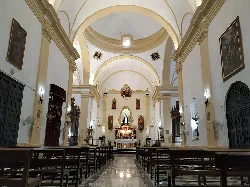
View of the church interior with altar and high vaulted ceilings.
Lucainena de las TorresAlmería

What can I see inside the Iglesia Nuestra Señora de Montesión?

Inside the Iglesia Nuestra Señora de Montesión, you will find a neoclassical design with a single nave and a dome over the crossing. The church has a unique layout resembling a Latin cross and features two entrances. Its historical significance is enhanced by its origins as a former mosque, making it a key site for visitors interested in local history.

Iglesia Nuestra Señora de Montesión For visitors ›

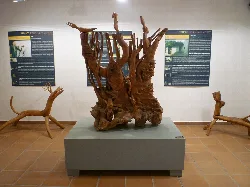
Wooden sculpture in a museum with informational panels on the wall.
ArboleasAlmería

What can I see at the Museo Pedro Gilabert?

The Museo Pedro Gilabert features a collection of 142 sculptures made from olive wood. Opened in 2003, the museum showcases the artistic work of Pedro Gilabert, offering visitors a unique insight into his creative process and the beauty of wood as a medium.

Museo Pedro Gilabert For visitors ›

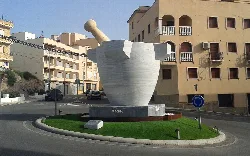
Large marble mortar sculpture in a roundabout in Macael.
MacaelAlmería

Where can I find the largest mortar in the world?

The largest mortar in the world is located in Macael. Made from white marble, it weighs 50,000 kilograms and features a base of gray marble and a yellow marble pestle. This monumental piece has been recognized by the Guinness World Records since 2015.

Mortero más grande del Mundo For visitors ›

MacaelAlmería

What is the Fuente de los Leones in Macael?

The Fuente de los Leones is a replica of the famous fountain from the Alhambra, made from white marble from Macael. It features twelve distinct lions and inscriptions in Arabic and Spanish, showcasing the town's rich cultural heritage and craftsmanship.

Fuente de los Leones For visitors ›

BenitaglaAlmería

What is the significance of the Castillico in Benitagla?

The Castillico is a cultural heritage site, representing the remnants of a 14th-century watchtower located about 200 meters from the village. It showcases the historical architecture of the region but is in poor condition due to agricultural activities.

Castillico For visitors ›

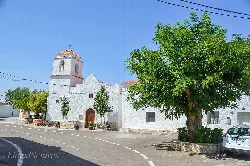
Village square with white church and large tree in Benitagla.
BenitaglaAlmería

What is the architectural style of the church in Benitagla?

The church in Benitagla, dedicated to San Juan and the Virgen de la Piedad, features a simple facade with whitewashed walls. It was built on the site of an old mosque, preserving elements of its Moorish past, including traces of a minaret.

Iglesia parroquial For visitors ›

InstinciónAlmería

What is Instinción known for?

Instinción is known for its picturesque landscapes, located in the Alpujarra Almeriense and the Valle del Andarax. The area features a mix of mountainous terrain, including the Sierra de Gádor and Sierra Nevada, providing a rich variety of natural beauty. The local economy is primarily based on agriculture, particularly citrus cultivation, and the town has a rich historical background dating back to the Arab period.

For visitors ›

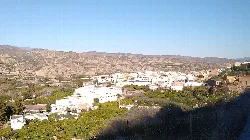
Panoramic view of Instinción with white houses and mountains.
InstinciónAlmería

What can I see in the panoramic views of Instinción?

The panoramic views of Instinción showcase its stunning landscape, characterized by rolling hills, agricultural fields, and the backdrop of the Sierra Nevada mountains. These vistas highlight the town's natural beauty and its integration into the surrounding environment, making it a picturesque spot for photography and sightseeing.

For visitors ›

SorbasAlmería

What are the main attractions in Sorbas?

Sorbas is known for its stunning natural landscape, particularly the Karst en Yesos, featuring over 1000 interconnected caves with impressive geological formations. The town also boasts historical sites like the Iglesia Parroquial de Santa María and the Teatro Villaespesa. The unique architecture of the 'casas colgantes' adds to its charm, along with various plazas and miradores offering picturesque views.

For visitors ›

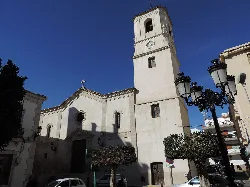
Sorbas parish church with tower and clock in the center.
SorbasAlmería

What is the architectural style of the Iglesia Parroquial de Santa María?

The Iglesia Parroquial de Santa María showcases a blend of architectural styles, including Mudéjar, Baroque, and Neoclassical elements. Constructed in 1592, it features a Latin cross layout, three Mudéjar-style naves, and a Baroque altar. The church's tower and facade reflect the diverse architectural heritage of Almería.

Iglesia Parroquial de Santa María For visitors ›

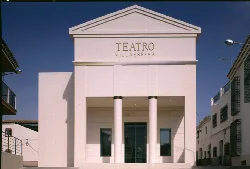
Facade of Villaespesa Theater with columns in Sorbas.
SorbasAlmería

What is the Teatro Villaespesa known for?

Teatro Villaespesa is a notable cultural venue in Sorbas, recognized for hosting various performances and events. Its modern architectural design contrasts with the historical elements of the town, making it a focal point for local arts and entertainment. The theater enhances the cultural landscape of Sorbas.

Teatro Villaespesa For visitors ›

SorbasAlmería

What are the best viewpoints in Sorbas?

Sorbas features several viewpoints, or miradores, which provide stunning views of the surrounding landscape and the unique 'casas colgantes'. Notable spots include the mirador de Santa Cecilia, where visitors can enjoy vistas of the Afa ravine and the picturesque architecture of the town. These viewpoints are perfect for photography and relaxation.

For visitors ›

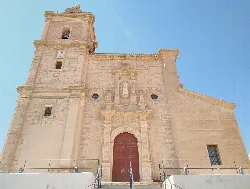
Facade of an old church with bell tower and wooden door in Gádor.
GádorAlmería

What can I see at the Iglesia de Nuestra Señora del Rosario?

The Iglesia de Nuestra Señora del Rosario, constructed between 1768 and 1780, showcases a blend of Baroque and Neoclassical architecture. Situated on a hill, it stands as one of the most monumental churches in Almería province. Its design reflects the transitional period between the two styles, making it an architectural highlight in Gádor.

Iglesia de Nuestra Señora del Rosario For visitors ›

GádorAlmería

What is the Cortijo de Cuatro Torres?

The Cortijo de Cuatro Torres is a distinctive farmhouse characterized by its four corner towers, giving it a fortress-like appearance. This historic building has served various purposes over the years, including as a prison and hospital during the Civil War, showcasing its diverse history.

Cortijo de Cuatro Torres For visitors ›

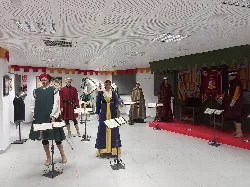
Exhibition of costumes and historical objects in a museum in Fiñana.
FiñanaAlmería

What can I see at the Museo Etnológico in Fiñana?

The Museo Etnológico features eight rooms that recreate the lifestyle of Fiñana's early 20th-century residents. Visitors can explore a traditional kitchen, various crafts, and historical artifacts, including a unique gift from the Catholic Monarchs to the town's council.

Museo Etnológico For visitors ›

Aerial view of Fiñana with houses, streets, and agricultural fields.
FiñanaAlmería

What is the Museo de la Recreación Histórica?

Inaugurated in 2021, the Museo de la Recreación Histórica features four rooms dedicated to historical characters, their biographies, and period costumes. It includes a projection room and a workshop for creating costumes used in local recreations, celebrating Fiñana's cultural heritage.

Museo de la Recreación Histórica For visitors ›