Sights

3,246 questions

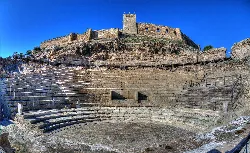
Roman theater in Medellín with seating and stage on the hillside.
MedellínBadajoz

What is the significance of the Roman theater in Medellín?

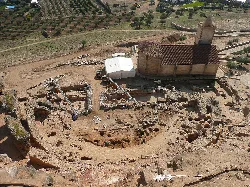
The Roman theater in Medellín is a remarkable archaeological site located on the southern slope of the castle hill. It dates back to the late Republican period and could accommodate around 3,200 spectators. Excavations have revealed much about its structure and decorative elements, highlighting its historical importance and exceptional state of preservation.
Teatro romano For visitors ›

Archaeological excavations of the Roman theater in Medellín, seen from the castle.
MedellínBadajoz

What is the architectural style of the church in Medellín?

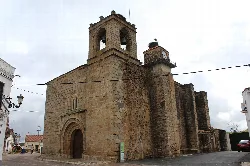
The church in Medellín, located near the Roman theater, features a traditional architectural style typical of the region. Its design reflects the historical influences of both the medieval and later periods, contributing to the town's cultural landscape.

church For visitors ›

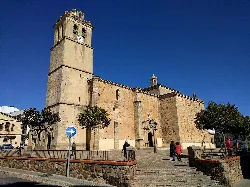
Stone church facade with bell tower in La Roca de la Sierra.
La Roca de la SierraBadajoz

What can you tell me about the Iglesia Parroquial de Nuestra Señora del Prado?

The Iglesia Parroquial de Nuestra Señora del Prado is a significant structure dating back to the 15th century. It features Gothic porticos and a Renaissance tower. The interior is notable for its star-shaped ribbed vault, reconstructed after the 1755 Lisbon earthquake. It once housed a retablo by Luis de Morales, which was lost during the Spanish War of Independence.

Iglesia Parroquial de Nuestra Señora del Prado For visitors ›

La Roca de la SierraBadajoz

What is the architectural style of the buildings in La Roca de la Sierra?

The architecture in La Roca de la Sierra features whitewashed two-story houses with various styles of doorways. The most notable building is the parish church, showcasing Gothic and Renaissance elements, particularly in its façade and interior design.

For visitors ›

La Roca de la SierraBadajoz

Can you tell me about the medieval bridge in La Roca de la Sierra?

The medieval bridge in La Roca de la Sierra is a Romanesque structure located at the edge of the village. It features three stone arches and offers picturesque views. This bridge historically connected the region, serving as a vital route between Badajoz and Cáceres.

bridge For visitors ›

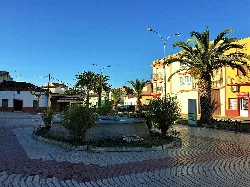
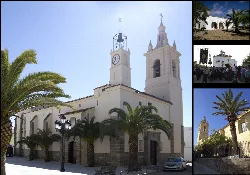
Main square with palm trees and buildings in La Haba.
La HabaBadajoz

What can you tell me about the Plaza Principal in La Haba?

The Plaza Principal is a central gathering place in La Haba, characterized by its palm trees and a fountain. It serves as a communal space for residents and visitors alike, often bustling with activity. The plaza is surrounded by colorful buildings, contributing to the vibrant atmosphere of the town. It's a great spot to relax and enjoy the local ambiance.

Plaza Principal For visitors ›

La HabaBadajoz

What is the Ermita de Nuestra Señora De La Antigua like?

The Ermita de Nuestra Señora De La Antigua is an important religious site located about 9 km from La Haba. It features a unique architectural design with a separate bell tower and houses a significant statue of the Virgin. The site is surrounded by historical relics, including Roman artifacts, making it a place of cultural and spiritual significance.

Ermita de Nuestra Señora De La Antigua For visitors ›

Talavera la RealBadajoz

What is the significance of the Iglesia parroquial católica Nuestra Señora de Gracia in Talavera la Real?

The Iglesia parroquial católica Nuestra Señora de Gracia is the most significant landmark in Talavera la Real. Originating in the 15th century, it has undergone numerous renovations. Notable features include its Renaissance-style main altarpiece from the 16th century and a tower erected in 1807. The church showcases rich artistic elements, including murals attributed to Fray Alonso de Gata.

Iglesia parroquial católica Nuestra Señora de Gracia For visitors ›

San Pedro Parish Church in Montijo, with tower and stone facade.
MontijoBadajoz

What is the Iglesia parroquial de San Pedro in Montijo known for?

The Iglesia parroquial de San Pedro, completed in 1574, showcases Gothic architecture with a notable granite tower. Inside, it features several chapels and retablos, including those dedicated to the Virgin of Carmen and St. Blas. The church's main entrance is adorned with a beautiful arch and the Portocarrero family crest, reflecting its historical significance in the community.

Iglesia parroquial de San Pedro For visitors ›

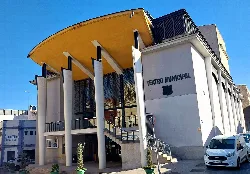
Facade of the Nuevo Calderón Municipal Theater in Montijo, Badajoz.
MontijoBadajoz

What can you tell me about the Teatro Municipal Nuevo Calderón?

Teatro Municipal Nuevo Calderón is a prominent cultural venue in Montijo, hosting various performances and events. Its modern architectural design contrasts with the historical buildings in the area, making it a key location for local entertainment and community gatherings.

Teatro Municipal Nuevo Calderón For visitors ›

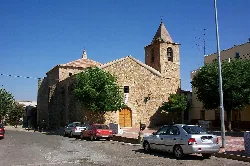
Square and parish church of Cordobilla de Lácara with parked cars.
Cordobilla de LácaraBadajoz

What is the Church of St. Peter like?

The Church of St. Peter the Apostle, located in the town square, dates back to the 15th century. It features a square-headed nave with a dome and houses significant wooden carvings, including those of San Juan Bautista and San Justo y San Pastor. The church has undergone several restorations, preserving its historical and cultural importance in the community.

Church of St. Peter For visitors ›

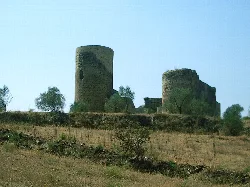
Ruins of an old tower in a field with small trees.
Medina de las TorresBadajoz

What is the Torre de los Moros in Medina de las Torres?

The Torre de los Moros is a 15th-century fortress originally built during the Muslim rule. It was constructed by the Order of Santiago and served as a stronghold in the region. The tower is notable for its historical significance and architectural features, reflecting the town's rich cultural heritage.

Torre de los Moros For visitors ›

Medina de las TorresBadajoz

What is the Ermita del Cristo del Humilladero like?

The Ermita del Cristo del Humilladero is a small religious building constructed between the 17th and 18th centuries. It features a single nave and a covered portico, housing a beautiful image of Christ. The architecture reflects the popular religious style of the region.

Ermita del Cristo del Humilladero For visitors ›

Church with two towers and palm trees in the foreground in Medina de las Torres.
Medina de las TorresBadajoz

What is the Iglesia Nuestra Señora del Camino known for?

The Iglesia Nuestra Señora del Camino, dating back to the 16th century, is notable for its three distinct façades showcasing Plateresque and Neoclassical styles. Inside, it features an impressive retablo and numerous paintings, making it a significant religious and artistic site in the region.

Iglesia Nuestra Señora del Camino For visitors ›

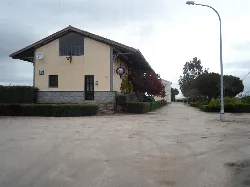
Two-story building with a gabled roof and small windows, next to a road and trees.
CampanarioBadajoz

What can you tell me about the old station in Campanario?

The old goods warehouse of the Campanario station has been converted into an albergue (hostel). This transformation preserves the historical significance of the building while providing modern accommodation options. The station is a notable landmark in the area, reflecting the town's past as a transportation hub.

old station For visitors ›

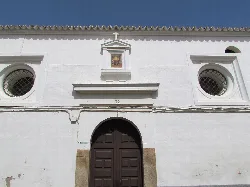
White facade with doors and round windows in Campanario.
CampanarioBadajoz

What is the Convento de las Hermanas Clarisas like?

The Convento de las Hermanas Clarisas is an important architectural feature in Campanario, showcasing Baroque elements from the 17th and 18th centuries. Its narrow temple design includes a dome and is adorned with decorative ceramics. The convent's historical significance adds to the cultural richness of the town.

Convento de las Hermanas Clarisas For visitors ›

CampanarioBadajoz

What is the significance of the Ermita de Nuestra Señora de Piedraescrita?

The Ermita de Nuestra Señora de Piedraescrita is a culturally significant site located about 5 km from Campanario. It features a rectangular design and houses a statue of the Virgin, which is linked to a Roman inscription. The site is recognized for its artistic value and was declared a cultural heritage site in 1993.

Ermita de Nuestra Señora de Piedraescrita For visitors ›

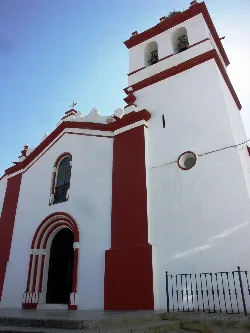
White church with bell tower and cross in Cheles, Badajoz.
ChelesBadajoz

What is the white building on the hill in Cheles?

The white building on the hill is likely the Church of La Purísima Concepción, which features distinctive architecture and serves as a key landmark in Cheles. Its prominent position makes it a recognizable feature of the town's landscape, reflecting its cultural and historical significance.

Iglesia parroquial católica For visitors ›

White sanctuary with dome and tower in Oliva de la Frontera
Oliva de la FronteraBadajoz

What is the Santuario de Nuestra Señora Virgen de Gracia?

The Santuario de Nuestra Señora Virgen de Gracia is a significant religious site in Oliva de la Frontera. It features a striking architectural design and serves as a place of worship and pilgrimage for locals and visitors alike. The sanctuary is dedicated to the Virgin of Grace, who is venerated in the region, and it is a focal point for cultural and religious events.

Santuario de Nuestra Señora Virgen de Gracia For visitors ›

Oliva de la FronteraBadajoz

What is the significance of the church of San Marcos Evangelista?

The church of San Marcos Evangelista is a notable monument in Oliva de la Frontera, built in the 18th century. It features a neoclassical design and is situated in the town's central square. The church plays an essential role in the community's religious life and is known for its architectural beauty and historical importance.

Iglesia parroquial de San Marcos Evangelista For visitors ›

Oliva de la FronteraBadajoz

What are the main historical landmarks in Oliva de la Frontera?

Oliva de la Frontera features several historical landmarks, including the Santuario de Nuestra Señora Virgen de Gracia and the church of San Marcos Evangelista. These sites reflect the town's rich history and architectural heritage, making them important for both residents and visitors interested in local culture and history.

For visitors ›

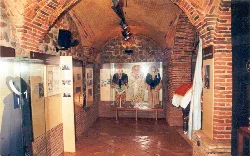
Interior view of the museum with traditional costumes and brick display cases.
PeñalsordoBadajoz

What can I see at the Museo de la Octava del Corpus?

The Museo de la Octava del Corpus, housed in an 18th-century building, showcases the unique cultural and religious significance of the Octava del Corpus Christi festival. Visitors can explore exhibits that highlight local traditions and artifacts, providing insights into the region's history and festive practices, making it a fascinating stop for those interested in local culture.

Museo de la Octava del Corpus For visitors ›

PeñalsordoBadajoz

What is the significance of the Ermita del Santo Cristo?

The Ermita del Santo Cristo de la Humildad is a notable landmark in Peñalsordo, dating back to the 16th or 17th century. Its unique architectural features, such as the brick facade and bell tower, reflect the town's historical and cultural heritage. The chapel serves as a place of worship and community gatherings.

Ermita del Santo Cristo For visitors ›

PeñalsordoBadajoz

What are the main attractions in Peñalsordo?

Peñalsordo boasts several attractions, including the Museo de la Octava del Corpus, which highlights local traditions, and the historic Ermita del Santo Cristo. Additionally, the beautiful natural surroundings offer opportunities for outdoor activities, making it a peaceful retreat for nature lovers.

For visitors ›