What can you tell me about the Church of Our Lady of Granada in Llerena?
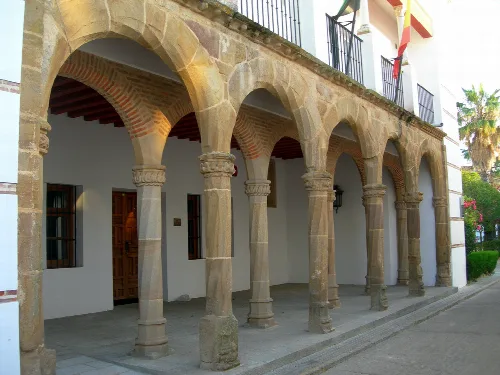
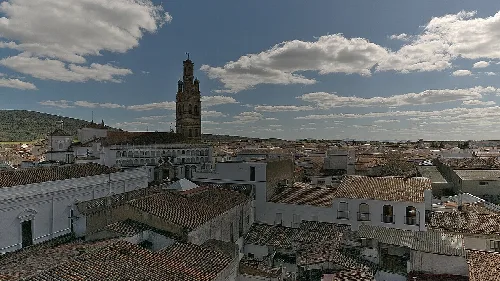
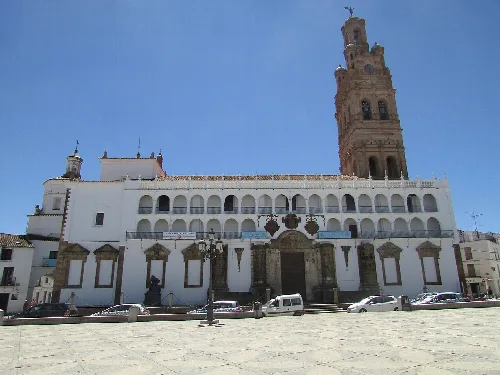
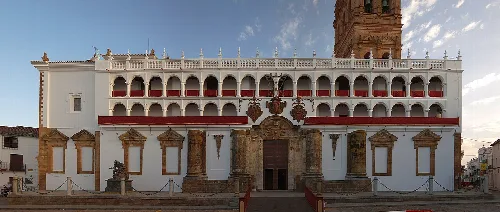
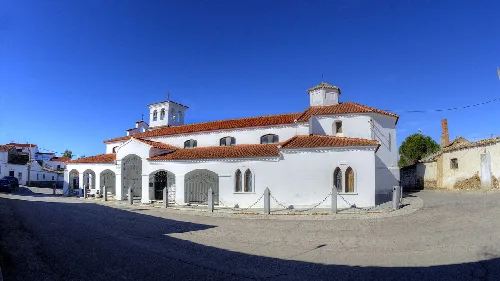
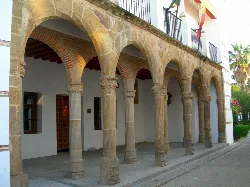
The Church of Our Lady of Granada is located in the Town Hall Square and features a baroque façade with a balcony supported by two-story arcs. This addition was made in the 18th century to facilitate access to events in the main square. It also boasts a magnificent brick tower, making it a notable landmark in Llerena.
Sights
Our Lady of Granada
How did Llerena's history change during the Arab period?
During the Arab period, Llerena, known as Ellerina, was a contested territory between Arabs and Christians. It was finally occupied in 1243 by Pelayo Pérez Correa, who was tasked by Ferdinand III of Castile to reconquer the area. This marked the beginning of significant cultural and demographic changes in the town.
History
What is the significance of the Tribunal de la Inquisición in Llerena?
The Tribunal de la Inquisición was established in Llerena in 1508 and became the third court of Spain in terms of jurisdiction. It played a significant role in the cultural and social life of the town, especially during its peak in the 16th century when it oversaw a large area and had numerous convents.
History
Tribunal de la Inquisición
What are some local festivals celebrated in Llerena?
Llerena hosts several local festivals, including the Madonna of the Pomegranate on August 15, the San Miguel Fair in September, and the Matanza teaching in early March. Additionally, the Tour 'La Morolla' has been gaining popularity during Easter Weekend.
Festivals & events
Can you tell me about the Plaza of Spain in Llerena?
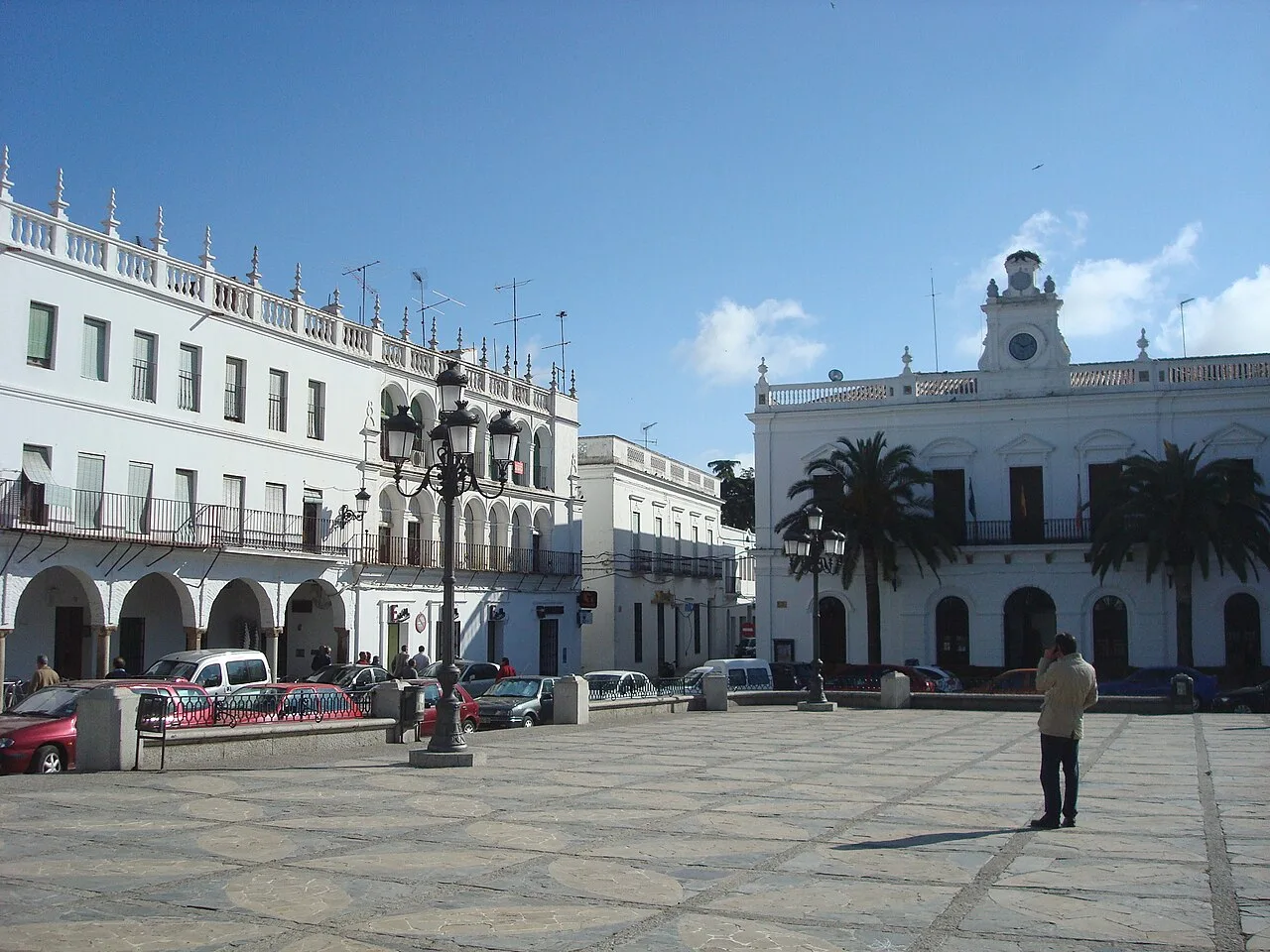
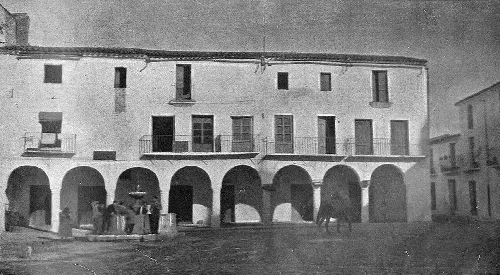
The Plaza of Spain is a central area in Llerena that has historically hosted a bullring and markets. It features the Church of Our Lady of Granada on one side and the City Hall on another. The plaza is known for its architectural beauty, including whitewashed brick arches and stone columns.
Sights
Plaza of Spain
What is the climate like in Llerena?
Llerena experiences a subtropical Mediterranean climate, with mild winters averaging 7.3 °C and hot, dry summers averaging 24.2 °C. The annual average temperature is 15.3 °C, and the rainy season occurs in winter, contributing to an annual rainfall of approximately 586mm.
Nature
For residents
What is the history behind the Order of Santiago in Llerena?
The Order of Santiago played a crucial role in Llerena's history, granting it Fueros in 1297 for defense and resettlement. The town became the residence of several notable masters of the order, which enhanced its importance in the 15th century as a major administrative center.
History
For residents
What can you tell me about the Convento de Santa Clara?
The Convento de Santa Clara, located across from the slide, features a distinctive veranda with a polygonal stone lattice. Inside, visitors can find a sculpture of St. Jerome by Juan Martínez Montanes, along with beautiful wall paintings and baroque altarpieces, showcasing its artistic heritage.
Sights
Convento de Santa Clara
How did Llerena's population change over the centuries?
Llerena's population saw significant growth during the 16th century, becoming the second largest center in Extremadura by 1591. However, by the end of the 17th century, various factors, including political crises and plagues, led to a decline in population, which continued into the 18th century.
History
For residents
What is the significance of the San Mateo fair in Llerena?
The San Mateo fair, held on September 21, was established by Lorenzo Suárez de Figueroa, a notable master of the Order of Santiago. This fair was significant for the local economy and social life, reflecting the town's historical importance during the order's prominence.
Festivals & events
For residents
 espana.net