History

1,007 questions

ÁloraMálaga

What is the significance of the name 'perote'?

The term 'perote' is believed to originate from the first regidor of Álora, Don Pero, shortly after the Reconquista. This name reflects the town's historical roots and local identity. Residents often refer to themselves as aloreños or perotes, highlighting their connection to the town's rich history and culture.
For residents ›

MarbellaMálaga

How has tourism impacted Marbella's growth?

Tourism has significantly impacted Marbella's growth, especially since the 1960s. The city transformed from a small village to a major tourist destination, attracting international visitors and leading to rapid urban development, increased population, and economic expansion.

For residents ›

BenalmádenaMálaga

What is the history of tourism in Benalmádena?

Tourism in Benalmádena began to flourish in the second half of the 20th century, transforming the town into a major tourist destination on the Costa del Sol. The development of hotels, recreational facilities, and attractions contributed to its growth, making it a popular choice for both domestic and international visitors seeking sun and leisure activities.

For residents ›

EsteponaMálaga

What is the significance of the name Estepona?

The name Estepona is derived from the ancient term 'Istippo,' with roots in pre-Roman and Arabic languages. This historical evolution reflects the town's long-standing significance as a coastal settlement, influenced by various cultures over the centuries, including Roman and Moorish periods.

For residents ›

TorremolinosMálaga

How has Torremolinos changed over the years?

Torremolinos transformed from a small fishing village into a major tourist destination in the 1950s. Its liberal atmosphere attracted a diverse crowd, including artists and intellectuals. Over the decades, it has evolved into a bustling hub for nightlife and tourism, becoming one of the most popular spots in Andalusia.

For residents ›

ColmenarMálaga

What historical events shaped Colmenar's development?

Colmenar's history includes its foundation in 1487, influenced by the transfer of land from Hamet el Zuque to Francisco de Coalla. It was home to Muslims who later became mudéjares. The village gained independence in 1777 and became a judicial center in the 19th century, reflecting its evolving significance in the region over time.

For residents ›

Villanueva de TapiaMálaga

What is the history behind the name "El Entredicho"?

The name "El Entredicho" originates from disputes between the towns of Iznájar and Archidona over land rights in the 16th century. This area was considered common land until the Crown sold it in 1603, leading to the establishment of Villanueva de Tapia. The conflicts over jurisdiction continued for years, reflecting its complex historical background.

For residents ›

Rincón de la VictoriaMálaga

What is the history of the name change from Benagalbón to Rincón de la Victoria?

The name change from Benagalbón to Rincón de la Victoria occurred in 1949, reflecting the shift in administrative importance from Benagalbón to Rincón. The name 'Rincón' originated in the 19th century, associated with a fishing settlement between two rocky promontories, and honors the local convent dedicated to the Virgin of Victory.

For residents ›

Villanueva del TrabucoMálaga

What is the history of the church in Villanueva del Trabuco?

The church in Villanueva del Trabuco, dedicated to Nuestra Señora de los Dolores, likely dates back to the late 17th century. It was officially established as a parish in 1760, providing spiritual support to the local community. Over the years, it has undergone various renovations and continues to play a central role in the town's religious and cultural life.

Iglesia parroquial de Nuestra Señora de los Dolores For residents ›

ArriateMálaga

What is the significance of the Battle of Valle de Arriate?

The Battle of Valle de Arriate, fought in 1407, was a pivotal moment in local history. It involved a defense against Muslim forces attempting to seize Setenil's machinery, resulting in a local victory that shaped the region's historical narrative.

For residents ›

AlmargenMálaga

What is the significance of the church in Almargen?

The church of Inmaculada Concepción in Almargen is a historical landmark built in the 16th century and later renovated in the 17th century. Its mannerist facade and mudéjar wooden ceilings are noteworthy features. The church serves as a central point for community gatherings and religious celebrations in the town.

church of Inmaculada Concepción For residents ›

AlmargenMálaga

How has Almargen's history influenced its culture?

Almargen's history, marked by its strategic location and agricultural potential, has fostered a rich cultural heritage. The presence of archaeological sites and historical artifacts, such as the Ídolo de Almargen, reflects the town's ancient roots. Local traditions, including gastronomy and festivals, are deeply intertwined with its agricultural past.

For residents ›

AlmargenMálaga

What is the significance of the archaeological sites in Almargen?

Almargen is home to numerous archaeological sites that reveal its historical significance, including remnants from the Copper Age and Roman colonization. These sites provide insight into ancient civilizations and their way of life, making them important for both cultural heritage and tourism in the region.

For residents ›

PizarraMálaga

What is the historical background of Pizarra?

Pizarra's history dates back to the late 15th century, emerging as a village in the late 1500s. It gained independence from Álora in the 19th century after a series of legal battles. The town's development was marked by agricultural growth and the establishment of local governance, reflecting the tenacity of its residents throughout history.

For residents ›

PalmaBalearic Islands

What historical periods influenced Palma's development?

Palma's history is marked by various influences, including Roman, Byzantine, and Moorish periods. Each era contributed to the city's architecture, culture, and economy, shaping it into the vibrant city it is today.

For residents ›

IncaBalearic Islands

What is the history of the Jewish quarter in Inca?

Inca's Jewish quarter was historically significant, considered the second aljama of Mallorca. It featured a small synagogue and was a hub for Jewish life in the region. The area contributed to the cultural and economic dynamism of Inca before its decline, particularly during the events of 1391 when the Jewish community faced severe persecution.

For residents ›

CalviàBalearic Islands

What is the significance of the coat of arms of Calvià?

Calvià's coat of arms features a blue shield with a paschal lamb holding a flag with St George's Cross, crowned by a royal crown. This emblem, approved on 25 June 1976, symbolizes the municipality's historical and cultural identity, reflecting its Christian heritage and connection to the region's history.

For residents ›

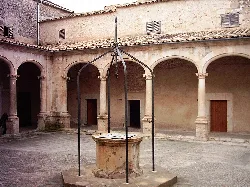
Cloister with well in the center and stone arches in Sineu.
SineuBalearic Islands

What is the Claustre de Sant Francesc in Sineu?

The Claustre de Sant Francesc is a historical cloister in Sineu that has been undergoing restoration. It was previously used as a barracks for the Civil Guard and is now envisioned as a cultural center. The cloister also houses the municipal library and archives, making it an important site for both heritage and community activities.

Claustre de Sant Francesc For residents ›

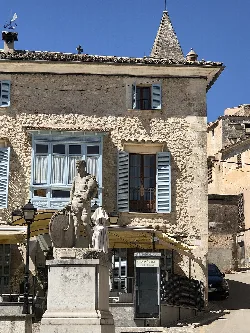
Francesc Alomar sculpture in the Fossar Square, Sineu.
SineuBalearic Islands

What is the history behind the statue in the Plaça del Fossar?

The statue in the Plaça del Fossar honors Francesc Alomar, a notable figure in Sineu's history. This sculpture reflects the town's appreciation for its local heroes and cultural figures, serving as a reminder of Sineu's rich heritage and community pride.

Francesc Alomar statue For residents ›

AlbaceteAlbacete

What can you tell me about the Los Llanos Air Base?

Los Llanos Air Base is a significant military facility in Albacete, housing Wing 14 of the Spanish Air Force. It plays a crucial role in training and operations, hosting advanced aircraft like the Eurofighter Typhoon. The base is integral to the city's economy and military presence, providing numerous jobs and contributing to national defense.

Los Llanos Air Base For residents ›

Statue of Our Lady of Bethlehem with crown and attire inside a church.
AlmansaAlbacete

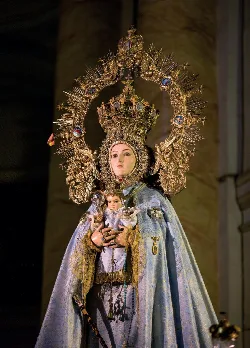
What is the significance of the Virgen de Belén in Almansa?

The Virgen de Belén is Almansa's patron saint, recognized by a papal bull from Urban VIII in 1644. She was canonically crowned on May 5, 1925. The annual festivities in her honor reflect the town's deep cultural and religious ties, with the main celebration occurring on May 6.

For residents ›

AlmansaAlbacete

Are there any notable historical events associated with Almansa?

Almansa is known for the Battle of Almansa, fought on April 25, 1707, during the War of Spanish Succession. This battle was significant in determining the future of the Spanish crown. Additionally, Almansa became a city in 1778 and has a rich history tied to various noble families and political changes over the centuries.

For residents ›

MolinicosAlbacete

What is the history behind the name Molinicos?

The name Molinicos derives from several flour mills that existed along the Arroyo Morote during the 17th and 18th centuries. Initially known as Morote, the village evolved, and the current name reflects its historical connection to these mills.

For residents ›

BienservidaAlbacete

How did Bienservida get its name?

The name Bienservida is said to originate from a legend involving the Countess of Paredes in the 16th century. After receiving excellent hospitality from the locals, she named the village 'Bienservida,' meaning 'well served,' as a tribute to the kindness she experienced during her visit.

For residents ›