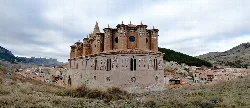
What is the history behind the Iglesia del Apóstol Santiago el Mayor in Montalbán?
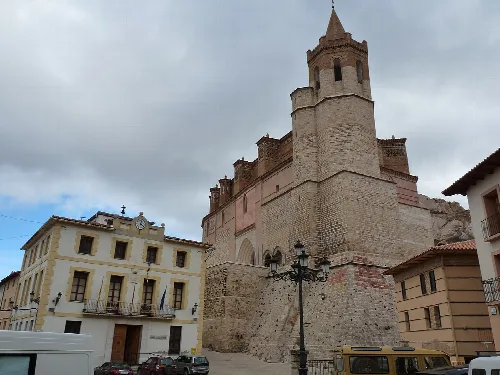
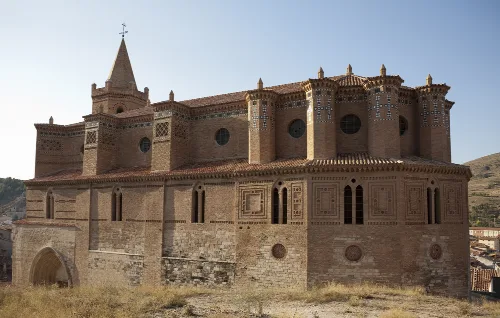
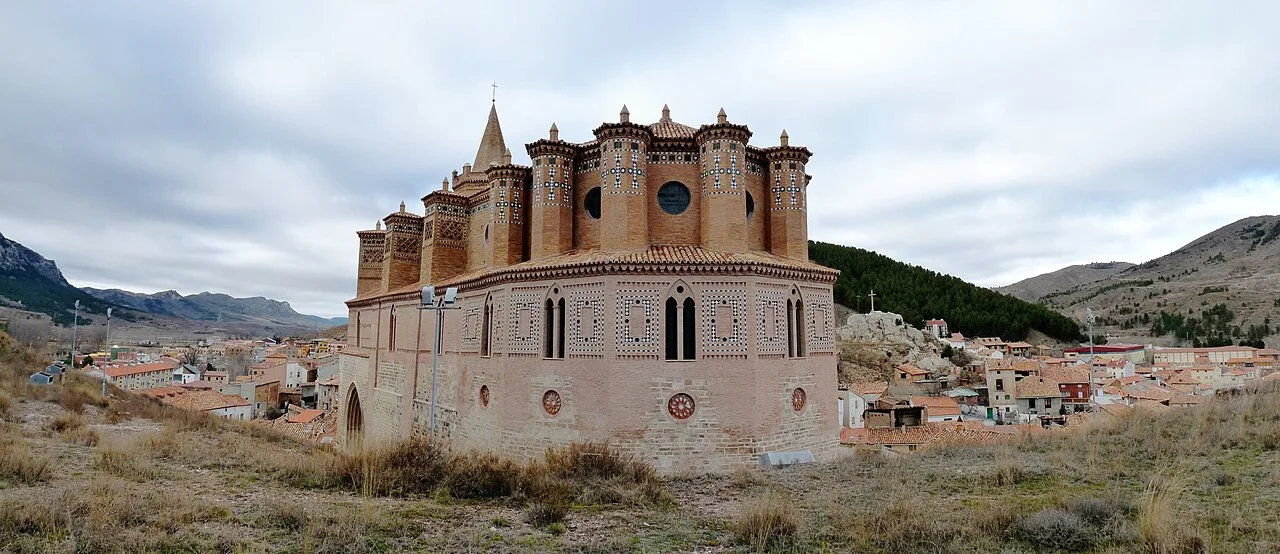
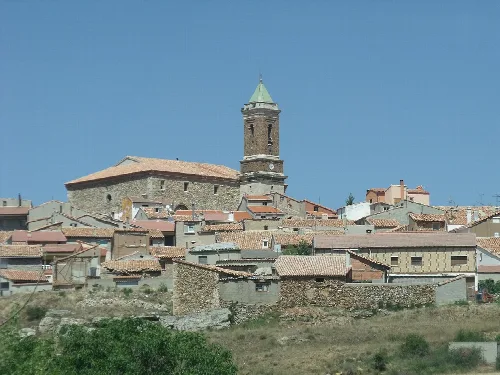
The Iglesia del Apóstol Santiago el Mayor was constructed during the 13th and 14th centuries in a Gothic-Mudéjar style. Its history dates back to 1208, when the villa was reconquered by Pedro II. The church served as a significant part of a defensive complex built by the Order of Santiago. It has undergone restorations due to damage from various conflicts, including the Civil War.
History
Iglesia del Apóstol Santiago el Mayor
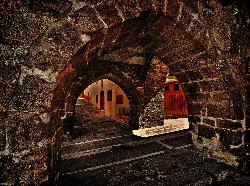
What can you tell me about the Portal de Daroca in Montalbán?
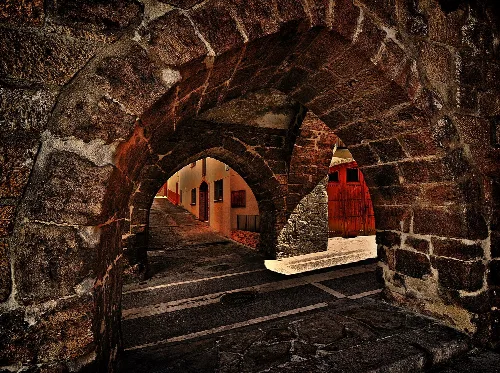
The Portal de Daroca, also known as Torreón de la Cárcel, is an impressive entrance to the historical center of Montalbán. It features a well-constructed arch and consists of three internal levels. This portal has historical significance, having been built during the War of the Two Pedros to fortify the town against invasions.
Sights
Portal de Daroca
How does the climate in Montalbán affect daily life?
Montalbán experiences an extreme climate due to its high altitude, with winter temperatures averaging -0.3 °C and summer temperatures reaching 30 °C. This harsh climate has led to a decline in agriculture, as the terrain is difficult and the weather conditions are not favorable for farming, pushing residents towards mining as a primary occupation.
Living there
For residents
What are the main festivities celebrated in Montalbán?
Montalbán hosts several vibrant festivals throughout the year. Notable events include the Fiesta del Cid in July, celebrating the historical figure's passage through the area, and the patronal fiestas in September, honoring the Virgen del Castillo and San Fausto. The festivities feature traditional activities like the 'toro embolado' and community gatherings around bonfires during San Antón in January.
Festivals & events
What is the significance of the archaeological site Pozos Boyete near Montalbán?
Pozos Boyete is an important archaeological site located within Montalbán's municipality, dating back to the Bronze Age. It is notable for its schematic rock engravings, which provide insight into the region's prehistoric cultures and artistic expressions, making it a valuable site for understanding the area's ancient history.
History
What are the main economic activities in Montalbán?
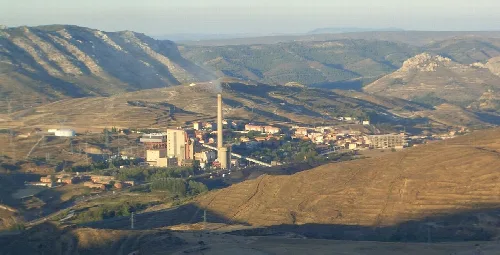
The economy of Montalbán is primarily driven by mining, which has become the main source of employment for residents. The challenging climate and rugged terrain have led to a decline in agricultural activities, pushing the community to focus on mining and related services, making it a commercial hub alongside nearby Utrillas.
Living there
For residents
What are the main features of Montalbán's historical fortifications?
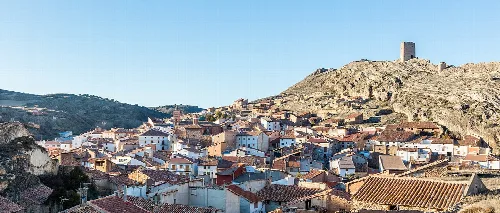
Montalbán's historical fortifications include remnants of walls built in 1363, designed to protect against invasions from the Kingdom of Castile. The town features two main gates and a tower, reflecting its strategic importance during medieval conflicts. These structures are a testament to the town's rich history and architectural heritage.
Sights
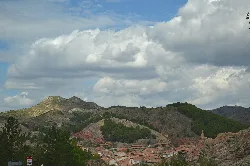
What is the view like from the general vista of Montalbán?
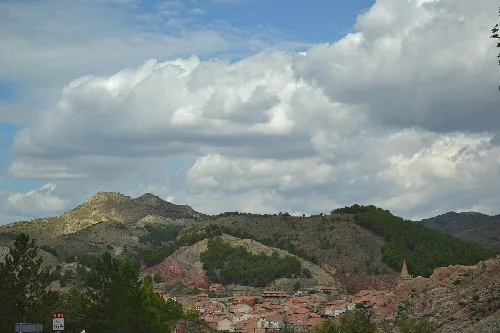
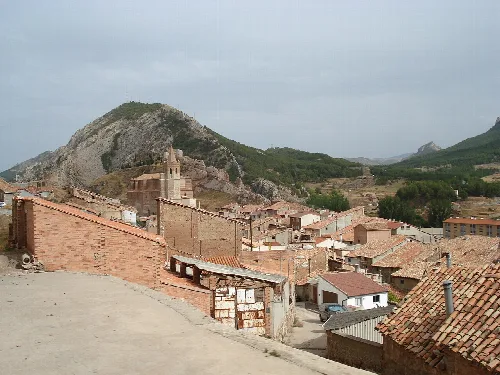
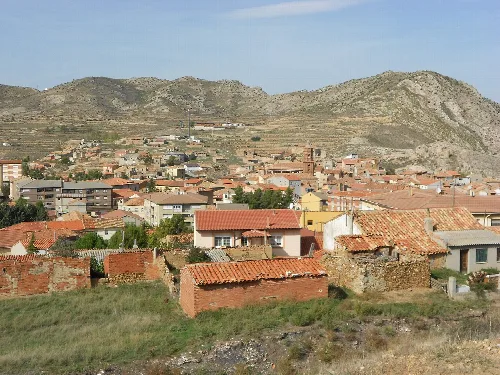
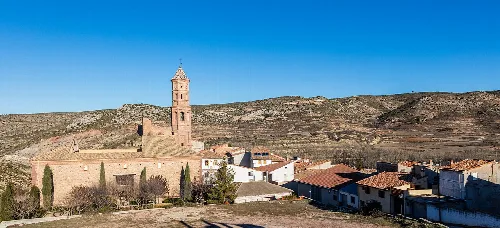
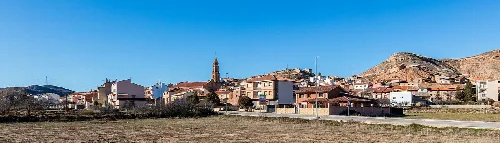
The general vista of Montalbán reveals a picturesque landscape characterized by its mountainous backdrop and the traditional architecture of the town. The elevated position of the village offers stunning views of the surrounding natural scenery, including the nearby Sierra de San Just, making it a scenic spot for visitors.
Nature
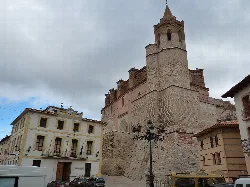
What is the architectural style of the Ayuntamiento in Montalbán?
The Ayuntamiento, or Town Hall, in Montalbán showcases a blend of architectural styles, prominently featuring elements from the Gothic and Mudéjar traditions. Its historical significance is highlighted by its proximity to the Iglesia del Apóstol Santiago el Mayor, reflecting the town's rich cultural heritage and communal governance throughout history.
Sights
Ayuntamiento
How has Montalbán's population changed over time?
Montalbán's population has fluctuated significantly throughout its history. It peaked at 2,760 residents in 1960 but has since declined to approximately 1,162 as of 2025. This decrease can be attributed to economic shifts, particularly the decline of agriculture and changes in the mining industry, impacting the community's demographics.
History
For residents
 espana.net