Sights

3,246 questions

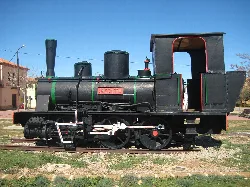
Old black locomotive with green details and an open cab.
Ojos NegrosTeruel

What can you tell me about the locomotive in Ojos Negros?

The locomotive SM-103 'Orconera' is a historical steam engine from the mining era, built in 1881. It served the Ferrocarril Minero de Sierra Menera, connecting Ojos Negros to Sagunto. Today, it is displayed in the town, symbolizing the rich industrial heritage and the importance of mining to the local economy.
locomotive For visitors ›

ValdeltormoTeruel

What is the significance of the La Roca del Tormo?

La Roca del Tormo is a notable rock formation near Valdeltormo, giving the town its name. It is a landmark that reflects the area's geological history and serves as a cultural symbol for the community.

La Roca del Tormo For visitors ›

ValdeltormoTeruel

What historical significance does the Vía Verde have in Valdeltormo?

The Vía Verde, originally a railway line, now serves as a greenway for walking and cycling. It connects Valdeltormo to other areas and showcases the region's historical transportation routes, enhancing local tourism and recreation.

Vía Verde For visitors ›

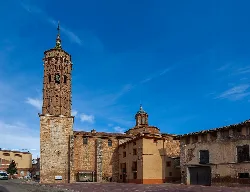
Tower of the Church of the Assumption and nearby buildings in Báguena.
BáguenaTeruel

What can you tell me about the Iglesia de la Asunción in Báguena?

The Iglesia de la Asunción, built in the early 1400s, was expanded in the 17th century to accommodate a growing population. It features a stunning Mudéjar-style tower constructed in 1609. Inside, you can find 16 Baroque altarpieces from the 18th century, showcasing the church's rich artistic heritage.

Iglesia de la Asunción For visitors ›

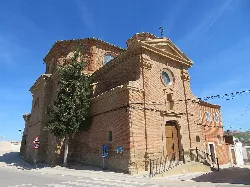
Church of S. Juan Bautista in Vinaceite, with brick facade and small staircase.
VinaceiteTeruel

What can you tell me about the Iglesia de San Juan Bautista?

The Iglesia de San Juan Bautista was commissioned by the 10th Duke of Híjar in the late 18th century. Designed by architect Agustín Sanz, it features a central circular space and a hexagonal tower. The church's construction was completed in 1781, and it showcases a blend of classical and baroque styles.

Iglesia de San Juan Bautista For visitors ›

VinaceiteTeruel

What are some historical landmarks to visit in Vinaceite?

In addition to the Iglesia de San Juan Bautista, visitors can explore the despoblado ibérico de La Bovina, an archaeological site of significant historical value. The town's landscape is dotted with traditional architecture and the scenic río Aguasvivas, making it a charming destination.

For visitors ›

EjulveTeruel

What can I see in Ejulve?

Ejulve offers various attractions, including the Monumento natural de los Órganos de Montoro, the cave of Recuenco, and the Sierra de Majalinos. These sites provide stunning landscapes and opportunities for outdoor activities like hiking and nature observation, making it a great destination for nature lovers.

For visitors ›

San Martín del RíoTeruel

What can you tell me about the Iglesia de San Martín?

The Iglesia de San Martín features late Gothic architecture with a single nave and star-shaped ribbed vaults. It houses impressive altarpieces sculpted between the 16th and 18th centuries, including a Romanesque statue of the Virgen del Buen Reposo from the 12th century, making it a key cultural site in the town.

Iglesia de San Martín For visitors ›

San Martín del RíoTeruel

What is the Peirón de la Virgen del Pilar?

The Peirón de la Virgen del Pilar is a notable landmark marking the entrance to San Martín del Río. It features a slender brick pillar adorned with decorative elements and a niche housing a statue of the Virgin. Historically, it served as a gathering point for community celebrations, particularly on October 12.

Peirón de la Virgen del Pilar For visitors ›

San Martín del RíoTeruel

What is the significance of the Ermita de San Francisco?

The Ermita de San Francisco, a Baroque structure from the 17th century, is notable for its cross-shaped layout and beautiful dome. It historically served as a place for the community to gather, especially during Holy Week, housing the processional figures used in local traditions.

Ermita de San Francisco For visitors ›

San Martín del RíoTeruel

What is the Museo del vino?

The Museo del vino in San Martín del Río showcases the region's viticulture history. It houses a collection of tools and equipment used in winemaking, offering insight into traditional practices and the importance of wine production in the local economy and culture.

Museo del vino For visitors ›

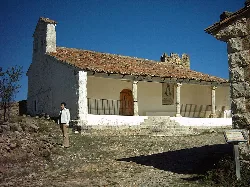
Stone chapel with tiled roof and columns in San Agustín, Teruel.
San AgustínTeruel

What is the significance of the Ermita de Nuestra Señora de Pradas?

The Ermita de Nuestra Señora de Pradas is a notable Gothic structure from the 15th century, featuring a single nave and a wooden roof. Originally owned by the Baron de Escriche, it underwent renovations in 1866 and 1985. The chapel is a focal point for local celebrations, particularly during the festivities in May.

Ermita de Nuestra Señora de Pradas For visitors ›

Building in San Agustín, Teruel, with the phrase "This land is Aragón" on the facade.
San AgustínTeruel

What is the architectural style of the church in San Agustín?

The church in San Agustín is a beautiful example of Baroque architecture from the 17th century. It features three naves, a barrel vault, and a distinctive tower. The design reflects the region's historical and cultural influences, making it a significant landmark in the town.

For visitors ›

Noguera de AlbarracínTeruel

Can you tell me about the Iglesia de San Miguel?

The Iglesia de San Miguel is a prominent 18th-century church in Noguera de Albarracín. It features a three-nave layout with a central vault and a red masonry exterior. Notable for its artistic elements, the church includes beautiful interior paintings dated back to 1776, making it a significant architectural landmark in the area.

Iglesia de San Miguel For visitors ›

MirambelTeruel

What can I see in the historical center of Mirambel?

The historical center of Mirambel is one of Aragón's most significant architectural ensembles. It features well-preserved medieval walls, notable buildings like the Casa Consistorial and the churches of Santa Margarita and Santa Catalina. The area is recognized as a Bien de Interés Cultural and was awarded the Europa Nostra Gold Medal for restoration efforts.

For visitors ›

MirambelTeruel

What is the Casa de Aliaga like?

The Casa de Aliaga is a typical Renaissance palace in Mirambel, showcasing classic Aragonese architectural features. Its entrance has a semi-circular arch, and the noble floor features moldings on the windows. The building is characterized by its gallery of arches beneath a prominent overhanging eave, reflecting the status of its former inhabitants.

Casa de Aliaga For visitors ›

MirambelTeruel

What is the Casa Castellot like?

The Casa Castellot is a typical Aragonese Renaissance palace located in Mirambel. It features a simple yet elegant facade with a semi-circular arch at the entrance and large, molded windows on the noble floor. The building is topped with a gallery of arches beneath a wooden eave, reflecting the historical significance of its former owners.

Casa Castellot For visitors ›

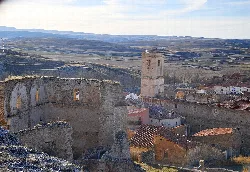
Ruins of the church with tower and walls in Camarillas
CamarillasTeruel

What can you tell me about the Iglesia de la Virgen del Castillo?

The Iglesia de la Virgen del Castillo is a Baroque church built in the 18th century, replacing an earlier medieval temple. It features a three-nave layout and was constructed using masonry and stone. Although it suffered structural damage in the 1980s, it remains a significant historical site, having been declared a cultural heritage monument in 1982.

Iglesia de la Virgen del Castillo For visitors ›

CamarillasTeruel

What is the significance of the Fuente Vieja?

The Fuente Vieja is a Renaissance-era fountain located in the town center. Built in 1547, it features a covered structure and served as a vital water supply for both residents and livestock. It has historically been a social gathering point for the community.

Fuente Vieja For visitors ›

CamarillasTeruel

What is the Casa del Boticario?

The Casa del Boticario is a traditional building in Camarillas that once served as a pharmacy. It showcases popular Aragonese architecture and has been recently rehabilitated, preserving its historic exterior. It is recognized as a significant part of the town's architectural heritage.

Casa del Boticario For visitors ›

CamarillasTeruel

What is the Santuario de la Virgen del Campo?

The Santuario de la Virgen del Campo is a religious complex in Camarillas, featuring buildings from different architectural styles, including Gothic and Baroque. It is a local pilgrimage site, especially during regional religious celebrations, reflecting the area's cultural heritage.

Santuario de la Virgen del Campo For visitors ›

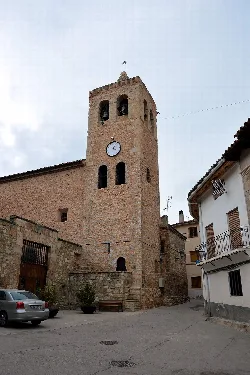
Bell tower of the parish church in El Cuervo with restored details.
El CuervoTeruel

What is the significance of the church in El Cuervo?

The Church of Nuestra Señora de la Asunción is a significant landmark in El Cuervo, built between the 17th and 18th centuries. It features a bell tower from the 16th century. This church serves as a central point for the community and hosts local celebrations, reflecting the town's cultural heritage and religious traditions.

Iglesia de Nuestra Señora de la Asunción For visitors ›

Panoramic view of El Cuervo with houses, mountains, and the bell tower.
El CuervoTeruel

What can you see from the viewpoint at the Castillo?

From the viewpoint at the Castillo, you can enjoy a panoramic view of El Cuervo and its surrounding valley. The landscape features the charming architecture of the village, the lush greenery along the Ebrón river, and the impressive Peña de los Picarzos in the background, making it a perfect spot for photography and relaxation.

Castillo For visitors ›

Church with romanesque-mudéjar portal and tower in La Hoz de la Vieja.
La Hoz de la ViejaTeruel

What can you tell me about the Iglesia de Nuestra Señora de las Nieves?

The Iglesia de Nuestra Señora de las Nieves dates back to the late 15th or early 16th century. It features a single nave and a polygonal apse with a late Gothic window. The church is recognized as a Bien de Interés Cultural and has historical significance due to its architecture and past events during the Spanish Civil War.

Iglesia de Nuestra Señora de las Nieves For visitors ›