Sights

3,246 questions

LilloToledo

What is the significance of the Ermita de la Esperanza?

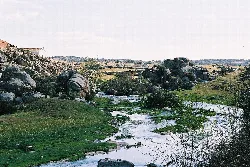
The Ermita de la Esperanza, dating back to the 16th century, is a significant religious site in Lillo. It has undergone renovations and is a focal point during the Romería in honor of Ntra. Sra. de la Esperanza. The surrounding area has been enhanced for community gatherings, making it a vital part of local culture and tradition.
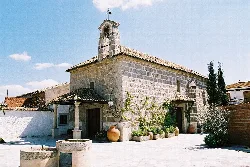
Ermita de la Esperanza For visitors ›

LilloToledo

What is the aeródromo in Lillo used for?

The aeródromo in Lillo is a sports facility primarily used for gliding, light aircraft, and parachuting. It hosted the World Gliding Championships in 2001, making it a notable location for aviation enthusiasts. The aeródromo offers opportunities for various aerial activities and is an integral part of the local sporting community.

Aeródromo de Lillo For visitors ›

Small stone church with bell tower in Menasalbas.
MenasalbasToledo

What can you tell me about the Ermita de la Virgen de la Salud?

The Ermita de la Virgen de la Salud, built in the mid-16th century, showcases Gothic rural architecture. Its robust stone walls and buttresses protect a beautiful interior featuring a nervated vault in the main chapel. It once served as a hospital for the poor until the 19th century.

Ermita de la Virgen de la Salud For visitors ›

Bridge of the Tower over a river in Menasalbas, Toledo.
MenasalbasToledo

What is the significance of the Puente de la Torre?

The Puente de la Torre is a notable landmark in Menasalbas, often associated with local traditions and celebrations. It serves as a picturesque spot for gatherings, particularly during the San Blas festivities, where the community enjoys a picnic after a mass in honor of the saint.

Puente de la Torre For visitors ›

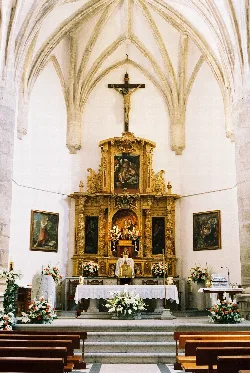
Main altar of the church with paintings, gold details, and white flowers.
MenasalbasToledo

What is the main church in Menasalbas?

The main church in Menasalbas is the Iglesia de Santa María Magdalena, built in the 16th century. It features three naves and lacks a tower due to destruction during the Carlist Wars. The altar is adorned with a retablo from the former parish of Santa Maria de los Reyes.

Iglesia de Santa María Magdalena For visitors ›

MenasalbasToledo

Is there a museum in Menasalbas?

Yes, Menasalbas has an Ethnological Museum established in the 1990s. It showcases a collection of tools and objects from the pre-industrial agrarian society, providing insights into traditional life, agriculture, and local customs throughout history.

For visitors ›

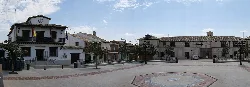
Main square with town hall and theater in Villaseca de la Sagra.
Villaseca de la SagraToledo

What can you tell me about the Plaza Mayor in Villaseca de la Sagra?

The Plaza Mayor is a square that features traditional wooden balconies and has historical significance, witnessing events like the Función Regia in 1808. It houses the ancient portal of Calixto and the Ayuntamiento. The square has hosted festivities and bullfights since the 16th century, making it a central hub of community life.

Plaza Mayor For visitors ›

Los NavalucillosToledo

What is the significance of the Ermita de Nuestra Señora de las Saleras?

The Ermita de Nuestra Señora de las Saleras, built in 1632, is an important religious site in Los Navalucillos. Constructed in brick and masonry, it features a Latin cross layout and has undergone complete restoration while maintaining its original structure. It serves as a cultural landmark reflecting the town's historical architecture.

Ermita de Nuestra Señora de las Saleras For visitors ›

Los NavalucillosToledo

What is the Plaza de toros in Los Navalucillos used for?

The Plaza de toros, built in 1919, is a bullring that hosts traditional bullfighting events during local festivities. With a capacity for around 1,000 spectators, it remains a cultural hub for the community, surrounded by a public park, and continues to be utilized for celebrations throughout the year.

Plaza de toros For visitors ›

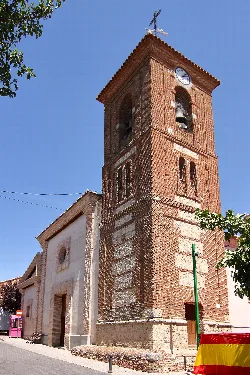
Brick bell tower of the parish church with clock in Quismondo.
QuismondoToledo

What can I see in Quismondo?

In Quismondo, visitors can explore the local church, Iglesia parroquial, which features a distinctive tower. The surrounding landscape is characterized by gentle hills and agricultural fields, offering a picturesque view of rural Spain. The town's historical significance is reflected in its architecture and archaeological remnants.

Iglesia parroquial For visitors ›

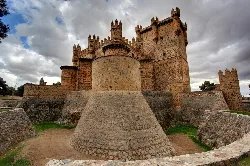
Guadamur Castle with tall walls and towers on a cloudy day.
GuadamurToledo

What can you tell me about the Castillo de Guadamur?

The Castillo de Guadamur is a historical castle built in the 15th century, likely on the site of an earlier Arabic watchtower. It features shields of the Ayala and Silva families and has served various purposes throughout history, including as a prison during the Inquisition. Today, it stands as a significant landmark reflecting the region's medieval heritage.

Castillo de Guadamur For visitors ›

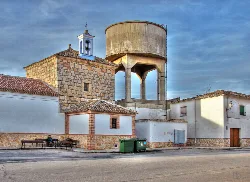
Small church and well in El Toboso town square.
El TobosoToledo

What is the Ermita de San Sebastián in El Toboso?

The Ermita de San Sebastián is a small chapel located in El Toboso, notable for its historical significance and architecture. It features traditional stone construction and is part of the town's religious heritage. The chapel is often associated with local celebrations, particularly during the feast of San Sebastián, which includes a bonfire and community gatherings.

Ermita de San Sebastián For visitors ›

El TobosoToledo

What can I see in the Museo Casa de Dulcinea?

The Museo Casa de Dulcinea showcases a reconstruction of the house of Doña Ana Martínez Zarco de Morales, the inspiration for Dulcinea in Cervantes' Don Quijote. Visitors can explore period-appropriate furnishings, a working dovecote, and a garden, all reflecting the life and times of this iconic character from literature.

Museo Casa de Dulcinea For visitors ›

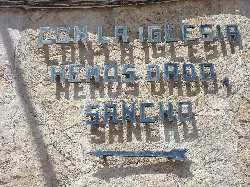
Inscription on a church wall in El Toboso that says: 'With the church we have given, Sancho'.
El TobosoToledo

What is the significance of the phrase 'Con la iglesia hemos dado, Sancho'?

This phrase from Don Quijote is a notable quote associated with El Toboso, as it references the local church. It is part of a route established in the town that highlights quotes from Cervantes' work, allowing visitors to explore the literary connections within the town's streets and landmarks.

For visitors ›

El TobosoToledo

What is the architecture like in El Toboso?

El Toboso showcases traditional Spanish architecture with buildings made of masonry and tapial, featuring whitewashed walls. The town's layout includes charming courtyards and wooden balconies, reflecting the historical and cultural influences of the region, making it visually appealing for visitors.

For visitors ›

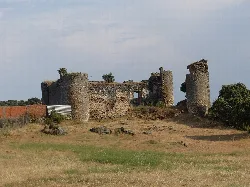
Ruins of a castle with towers in Mejorada, Toledo.
MejoradaToledo

What can I see at the Castillo de Mejorada?

The Castillo de Mejorada, located about 200 meters southeast of the town, features a square layout with circular towers at each corner. Although currently in ruins, remnants of its walls and a rectangular keep can still be observed. It was originally constructed in the late 13th century and later modified in the 16th century, serving as a residence for the Counts of Oropesa.

Castillo de Mejorada For visitors ›

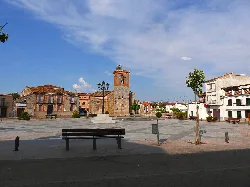
Square with church, benches, and trees in Mejorada, Toledo.
MejoradaToledo

What is the Plaza de la Constitución like?

The Plaza de la Constitución is a central square in Mejorada, characterized by its spacious layout and surrounding historical buildings. It serves as a gathering place for community events and festivities. Visitors can enjoy the local atmosphere, with cafes and shops nearby, making it a great spot to relax and observe daily life.

Plaza de la Constitución For visitors ›

MejoradaToledo

What can you tell me about the Iglesia de Nuestra Señora de la Asunción?

The Iglesia de Nuestra Señora de la Asunción is a notable church in Mejorada, featuring a unique architectural style typical of the Talavera region. It has elements from various periods, including a 15th-century tower and a 16th-century nave. The church reflects the town's historical and cultural heritage, making it a significant landmark.

Iglesia de Nuestra Señora de la Asunción For visitors ›

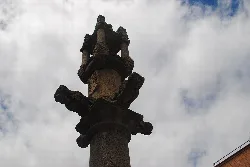
Stone column with a town pillar on top in the square of Castillo de Bayuela.
Castillo de BayuelaToledo

What can you tell me about the Rollo de Bayuela?

The Rollo de Bayuela, located in the town square, is a stunning example of late Gothic architecture from the early 16th century. Often referred to as the king of the rolls in the Toledo province, it features a tall monolithic column topped with a capitel adorned with four lion heads under a small temple. This architectural piece symbolizes the jurisdiction and historical significance of the area.

Rollo de Bayuela For visitors ›

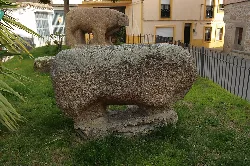
Stone Vetón boar sculpture at Castillo de Bayuela.
Castillo de BayuelaToledo

What are the Verracos vetones in Castillo de Bayuela?

The Verracos vetones are ancient stone sculptures from the Vetton culture, with the most notable being a bull located in the Plaza de San Andrés. These sculptures, carved from granite, served as territorial markers and are significant archaeological finds that highlight the region's historical heritage.

verracos vetones For visitors ›

Castillo de BayuelaToledo

What is the importance of the Centro de Interpretación de la Naturaleza y Patrimonio Histórico?

The Centro de Interpretación de la Naturaleza y Patrimonio Histórico serves as an educational hub, showcasing the region's natural and historical heritage. It features exhibits on local flora and fauna, as well as archaeological artifacts, including the significant Estela de Guerrero, making it an essential resource for understanding Castillo de Bayuela's past.

Centro de Interpretación de la Naturaleza y Patrimonio Histórico For visitors ›

Castillo de BayuelaToledo

What can you tell me about the church of San Andrés?

The church of San Andrés in Castillo de Bayuela, built around 1480, showcases a blend of Gothic and Renaissance architectural styles. It has undergone various renovations over the years, particularly after a fire in 1924. The church's interior features a remarkable retablo, recognized for its artistic value, making it a key landmark in the town.

Iglesia parroquial de San Andrés For visitors ›

Alcolea de TajoToledo

What can you tell me about the Iglesia de Nuestra Señora de la Asunción?

The Iglesia de Nuestra Señora de la Asunción, built in the 15th century, features a Gothic Mudéjar style. Its notable elements include a four-story tower, a stone baptismal font from the 11th century, and a wooden coffered ceiling.

Iglesia de Nuestra Señora de la Asunción For visitors ›

Alcolea de TajoToledo

What are the main landmarks in Alcolea de Tajo?

Key landmarks include the Iglesia de Nuestra Señora de la Asunción, the medieval Puente de las Cañadas, and the archaeological sites at Cerro de la Mesa and Puente Pino, showcasing the area's rich history.

For visitors ›