Sights

3,246 questions

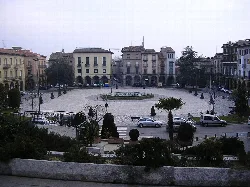
Fra Bernardí Square in Manlleu with buildings and a central fountain.
ManlleuBarcelona

What can you tell me about the Plaza de Fra Bernardí in Manlleu?

Plaza de Fra Bernardí is a central square in Manlleu, known for its porticoed design, completed in the early 20th century. It serves as a focal point for the community, hosting various events and activities. The square is surrounded by important buildings, including the town hall, making it a vibrant area for both residents and visitors.
Plaza de Fra Bernardí For visitors ›

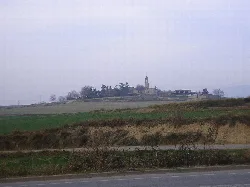
Church on a hill with fields and trees around.
ManlleuBarcelona

What is the significance of the Sant Esteve de Vilacetrú church?

Sant Esteve de Vilacetrú is a Romanesque church located on the outskirts of Manlleu. It reflects the region's historical architecture and is an essential part of the local cultural heritage. The church's serene setting adds to its appeal, making it a popular spot for visitors interested in history and architecture.

Sant Esteve de Vilacetrú For visitors ›

ManlleuBarcelona

What are some of the notable architectural styles in Manlleu?

Manlleu features a mix of architectural styles, including Romanesque, Gothic, and Baroque. Notable buildings like the church of Santa Maria showcase these styles, while modernist influences can be seen in various structures throughout the town. This diverse architectural heritage reflects the city's historical evolution and cultural significance.

For visitors ›

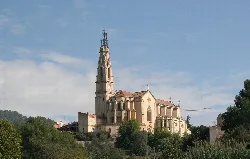
Sant Esteve church with tower and Gothic architecture in Castellar del Vallés.
Castellar del VallèsBarcelona

What is the significance of the Iglesia de Sant Esteve in Castellar del Vallès?

The Iglesia de Sant Esteve is a prominent landmark in Castellar del Vallès, known for its striking architecture. This church has historical importance as it was originally part of the parish that gave the town its name. Its location and design make it a central point of interest for visitors and residents alike, reflecting the town's cultural heritage.

Iglesia de Sant Esteve de Castellar del Vallés For visitors ›

CastellbisbalBarcelona

What is the main church in Castellbisbal?

The main church in Castellbisbal is dedicated to San Vicente. It was reconstructed in 1051 and has significant historical value, reflecting the town's religious and cultural heritage through the centuries.

San Vicente Church For visitors ›

Palau-solità i PlegamansBarcelona

What can you tell me about the Castle of Plegamans?

The Castle of Plegamans, a Gothic structure from the 14th and 15th centuries, features a tower dating back to the 11th century. It served as a fortified house rather than a traditional castle. The site hosts an annual Medieval Market since 2002, celebrating its historical significance.

Castle of Plegamans For visitors ›

Palau-solità i PlegamansBarcelona

What is the Masía de Can Cortès known for?

Masía de Can Cortès is notable for its cultural activities and historical significance. It houses various cultural entities and organizes events that promote local traditions. The building itself dates back to the 17th century and features architectural elements reflecting its long history.

Masía de Can Cortès For visitors ›

Palau-solità i PlegamansBarcelona

What is the Menhir de la Pedra Llarga?

The Menhir de la Pedra Llarga is a megalithic monument, likely used for religious purposes or as a territorial marker. Standing about 2.5 meters tall, it reflects the area's ancient history, with connections to local legends and archaeological significance.

Menhir de la Pedra Llarga For visitors ›

Palau-solità i PlegamansBarcelona

What are the main features of the Iglesia parroquial de Sant Genís?

The Iglesia parroquial de Sant Genís has a rich history, having been burned twice during the Civil War. Its reconstruction began in 1942, resulting in a modern church that retains elements of its original Romanesque style, including frescoes and stained glass from the mid-20th century.

Iglesia parroquial de Sant Genís For visitors ›

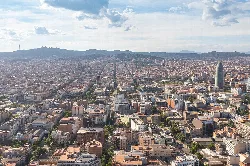
Aerial view of Barcelona city with buildings and mountains in the background
BarcelonaBarcelona

What is La Sagrada Familia and why is it famous?

La Sagrada Familia is a monumental basilica designed by architect Antoni Gaudí, located in Barcelona. It is renowned for its unique architectural style combining Gothic and Art Nouveau elements. Construction began in 1882 and continues today, with an expected completion date in the coming years. The basilica is a UNESCO World Heritage Site and attracts millions of visitors annually for its intricate facades and stunning interior.

La Sagrada Familia For visitors ›

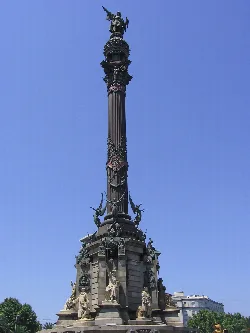
Tall column with statues at the base and a figure at the top.
BarcelonaBarcelona

What can you tell me about the Monumento a Colón?

The Monumento a Colón, or Columbus Monument, is a prominent landmark in Barcelona, located at the end of La Rambla. Erected in 1888, it commemorates Christopher Columbus's first voyage to the Americas. The monument features a tall column topped by a statue of Columbus pointing towards the sea. It's a popular spot for tourists, offering panoramic views from the top.

Monumento a Colón For visitors ›

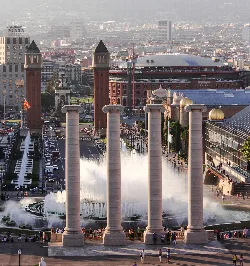
Six columns in the foreground with the fountain and Barcelona city behind
BarcelonaBarcelona

What are the Columnas de la Font Màgica de Montjuïc?

The Columnas de la Font Màgica de Montjuïc are part of the Magic Fountain of Montjuïc, a large fountain located near the National Palace. Built for the 1929 International Exposition, the fountain features spectacular light and music shows. The columns serve as an impressive backdrop, enhancing the visual experience during performances, which attract many visitors.

Columnas de la Font Màgica de Montjuïc For visitors ›

BarcelonaBarcelona

What is the significance of Montjuïc in Barcelona?

Montjuïc is a prominent hill in Barcelona, known for its historical significance and cultural venues. It is home to Montjuïc Castle, several museums, and the Olympic Stadium. The area offers beautiful gardens and stunning views of the city and harbor, making it a popular destination for both locals and tourists.

Montjuïc For visitors ›

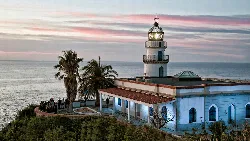
19th-century lighthouse in Calella with people and palm trees.
CalellaBarcelona

What can you tell me about the Calella Lighthouse?

The Calella Lighthouse, inaugurated in 1859, is a prominent symbol of the city. It was built on the site of an old medieval tower and originally featured an olive oil light lantern. Over the years, the lighthouse has undergone several modifications. Since 2011, it houses the Calella Lighthouse Interpretation Center, which explains its communication history and significance to the surrounding area.

Calella Lighthouse For visitors ›

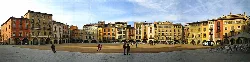
Panoramic view of Vic's main square with historic buildings and pedestrians.
VicBarcelona

What can I see in the Main Square of Vic?

The Main Square, or Plaça Major, is one of Vic's most picturesque spots, surrounded by beautiful historical buildings. It serves as a central hub for local events and gatherings. Visitors can enjoy the vibrant atmosphere, cafes, and shops, making it an ideal place to relax and soak in the local culture.

Main Square For visitors ›

VicBarcelona

What can you tell me about the architecture in Vic?

Vic boasts a rich architectural heritage, featuring a mix of medieval and modern styles. Notable structures include the Roman temple and the cathedral, which reflect the city's historical significance. The town's layout and buildings provide a charming atmosphere for exploration.

For visitors ›

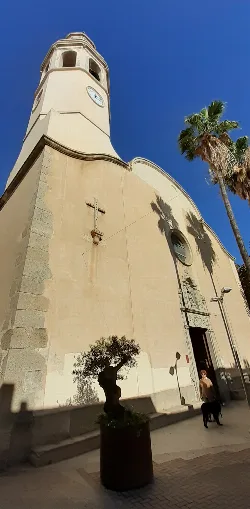
Facade of a church with tower and palm trees in Premià de Mar.
Premià de MarBarcelona

What is the significance of the church Sant Cristòfol in Premià de Mar?

The church of Sant Cristòfol is a notable landmark in Premià de Mar. Construction began in 1798 and was completed in 1854. It features Baroque altars and a unique octagonal bell tower. The church holds cultural significance and is a focal point for community events and celebrations, reflecting the town's historical roots.

Sant Cristòfol de Premià de Mar For visitors ›

Premià de MarBarcelona

Are there any notable cultural institutions in Premià de Mar?

Yes, Premià de Mar is home to the Museo de la Estampación Textil, which showcases the town's textile history. Additionally, cultural activities are held at Espacio la Amistat and the Patronato Social Premianenc, offering a variety of performances and events throughout the year.

For visitors ›

Panoramic view of Premià de Mar with sea and town in the background.
Premià de MarBarcelona

What is the view like from La Cisa in Premià de Mar?

From La Cisa, visitors can enjoy a panoramic view of Premià de Mar and the coastline. The vantage point offers a picturesque perspective of the town's layout, the Mediterranean Sea, and surrounding landscapes, making it a great spot for photography and relaxation.

For visitors ›

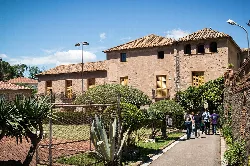
Stone building with tiled roof and wooden windows in Ripollet.
RipolletBarcelona

What can you tell me about the Casa Buxó in Ripollet?

Casa Buxó is a notable building in Ripollet, recognized as a Bien Cultural de Interés Local (BCIL). It is part of the Catalan Cultural Heritage Inventory, highlighting its historical significance. The building showcases architectural features typical of the region and serves as a reminder of Ripollet's rich cultural past.

Casa Buxó For visitors ›

RipolletBarcelona

What is the significance of the Teatro del Mercat Vell?

The Teatro del Mercat Vell, originally an old municipal market, was transformed into a theater in 1994. It represents a key cultural venue in Ripollet, hosting various performances and events. The building itself is a notable example of early 20th-century architecture, reflecting the town's historical development.

Teatro del Mercat Vell For visitors ›

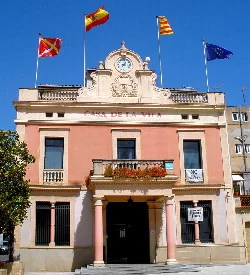
Rubí town hall building with flags and a clock on the facade.
RubíBarcelona

What is the Ayuntamiento de Rubí?

The Ayuntamiento de Rubí is the town hall of Rubí, located in the province of Barcelona. This historic building serves as the center of local government and administration. Its architectural style reflects the town's rich history and cultural significance, making it a notable landmark in the city.

Ayuntamiento de Rubí For visitors ›

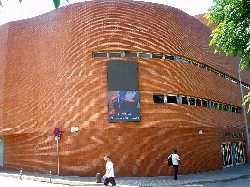
Brick facade of the La Sala Municipal Theatre in Rubí.
RubíBarcelona

What can I find at the Teatre Municipal La Sala?

Teatre Municipal La Sala is a cultural venue in Rubí that hosts a variety of performances, including theater, music, and dance. It serves as an important space for local artists and cultural events, contributing to the vibrant artistic scene in the city.

Teatre Municipal La Sala For visitors ›

CardedeuBarcelona

What is the Creu del Terme and its importance?

The Creu del Terme, built in 1679, is a notable monument in Cardedeu. It symbolizes the town's historical and cultural identity. Such monuments often serve as focal points for local traditions and community gatherings, highlighting the town's rich heritage.

Creu del Terme For visitors ›