Sights

3,246 questions

CardedeuBarcelona

What is the dolmen of Pins Rosers?

The dolmen of Pins Rosers is a megalithic monument that once stood in the region. It consists of nine monoliths and is steeped in local legend, believed to have origins tied to an ancient inn with a dark history. Now, it decorates the gardens of a local business, preserving its historical significance.
dolmen of Pins Rosers For visitors ›

IgualadaBarcelona

What is the significance of the Basílica de Santa María in Igualada?

The Basílica de Santa María, also known as the Iglesia Grande, is the most important historical and artistic site in Igualada. Primarily built in the 17th century, it features a single nave and twelve chapels. The church houses a notable organ from 1759, which is used in the annual International Organ Festival, attracting musicians and visitors alike.

Basílica de Santa María For visitors ›

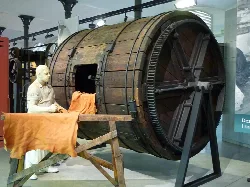
Large wooden drum at the Leather Museum of Igualada, with a woman figure and hides on display.
IgualadaBarcelona

What can I see at the Museo de la Piel?

The Museo de la Piel in Igualada, founded in 1954, is the first of its kind in the Iberian Peninsula and showcases the history and cultural significance of leather. It is divided into two buildings, featuring exhibits on leather production and usage throughout history, as well as the ancient methods of tanning used before industrialization.

Museo de la Piel For visitors ›

IgualadaBarcelona

What makes the Cementerio Nuevo a notable site?

The Cementerio Nuevo in Igualada, designed by architects Enric Miralles and Carme Pinós, is recognized for its artistic architecture and tranquil setting. It features unique elements like inclined niches and concrete tunnels, creating a peaceful atmosphere. The site is also the resting place of architect Miralles, adding to its significance.

Cementerio Nuevo For visitors ›

IgualadaBarcelona

What is the Paseo Verdaguer like?

Paseo Verdaguer, stretching about 1.5 km, is noted as the longest straight promenade in Spain. It features a central walkway lined with trees, creating a pleasant environment for walking. This classic-style avenue is a popular gathering place for locals and visitors, showcasing beautiful modernist architecture along its route.

Paseo Verdaguer For visitors ›

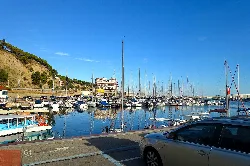
Port with boats and a car in the foreground in Arenys de Mar.
Arenys de MarBarcelona

What can you tell me about the port of Arenys de Mar?

The port of Arenys de Mar, founded in 1952, is one of the most significant on the Catalan coast. It serves as a vital hub for both fishing and recreational activities, housing the majority of the local fishing fleet. The daily fish auction attracts both locals and tourists, showcasing the renowned seafood, especially the gambas. The port also accommodates various types of sports boats, particularly during the summer months.

Arenys de Mar port For visitors ›

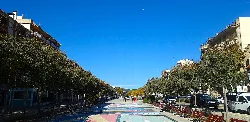
Riera in Arenys de Mar with trees and buildings on both sides under a blue sky.
Arenys de MarBarcelona

What is the Riera in Arenys de Mar like?

The Riera is the main commercial street in Arenys de Mar, characterized by two rows of trees providing shade. It serves as the central hub for local activities and shopping. The street is also prone to flooding during heavy rains, reflecting the town's geographical challenges. It features the historic Calisay building, an old herbal liqueur distillery.

Riera For visitors ›

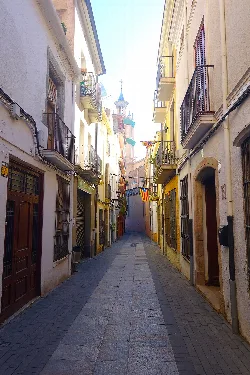
Narrow street with buildings and balconies in Arenys de Mar
Arenys de MarBarcelona

What can you tell me about the architecture in Arenys de Mar?

Arenys de Mar features a mix of historical and modern architecture, with notable buildings like the church dedicated to Santa María and the Calisay distillery. The streets are lined with colorful houses that reflect the town's maritime history. The blend of styles offers a charming atmosphere, inviting exploration of its rich architectural heritage.

For visitors ›

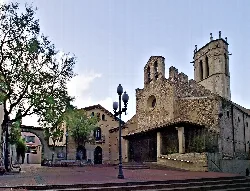
Old church with tower and stone structure in Santa Perpetua de Mogoda.
Santa Perpètua de MogodaBarcelona

What can you tell me about the Iglesia de Santa Perpèta?

The Iglesia de Santa Perpèta is a notable landmark in Santa Perpètua de Mogoda, reflecting medieval architecture. It has historical roots dating back to the area's early development and is central to the town's identity, having been referenced in documents since the 10th century.

Iglesia de Santa Perpèta For visitors ›

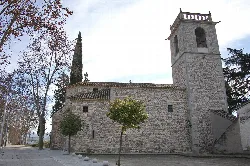
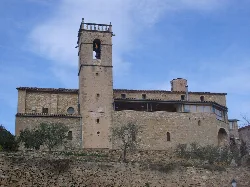
Sant Cristòfol church with tower and stone walls in Lliçà de Vall.
Lliçà de VallBarcelona

What is the significance of the Església de Sant Cristòfol in Lliçà de Vall?

The Església de Sant Cristòfol, built in the 14th century, is a significant landmark in Lliçà de Vall. It features a neoromantic style, with Renaissance porticos and frescoes by artist Raúl Capitani. The church has historical ties, being mentioned as early as 1113, and has undergone several restorations, the latest in 2012, revealing its original stone walls.

Església de Sant Cristòfol For visitors ›

Lliçà de VallBarcelona

What is Can Coll and its historical significance?

Can Coll is a historic manor house in Lliçà de Vall, notable for its square tower built in 1576. It reflects Renaissance architectural styles and has historical ties to the region's nobility. The site also features a chapel dedicated to San Juan, with murals from 1963.

Can Coll For visitors ›

Mollet del Vallès City Hall building with sculpture on the facade.
Mollet del VallèsBarcelona

What is the significance of the City Hall in Mollet del Vallès?

The City Hall of Mollet del Vallès, inaugurated on November 9, 2002, is an architectural landmark designed by the Serra-Vives-Cartagena team. It is located in the Can Mulà area, which won the European Prize for Urban Public Space in 2000. The building features a unique facade with a prominent mural by Joan Brossa, symbolizing the town's cultural identity.

City Hall For visitors ›

SitgesBarcelona

What are the main attractions in Sitges?

Sitges is famous for its beautiful beaches, vibrant nightlife, and cultural events. Key attractions include the Cau Ferrat Museum, the Maricel Museum, and the iconic Església de Sant Bartolomé i Santa Tecla. The annual Sitges Film Festival and Carnival are also major draws, showcasing the town's rich artistic heritage and lively atmosphere.

For visitors ›

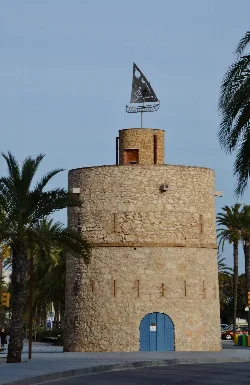
Stone tower with blue door and mast with decorative sail.
Vilanova i la GeltrúBarcelona

What is the significance of the Torre de Ribes Roges?

The Torre de Ribes Roges is a notable landmark in Vilanova i la Geltrú, showcasing the city's historical architecture. This tower, originally built for defense, adds to the cultural heritage of the area. It stands as a reminder of the city's past and is a popular spot for visitors interested in local history and architecture.

Torre de Ribes Roges For visitors ›

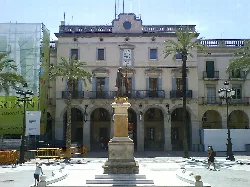
Town hall building with statue in the center and palm trees in the square.
Vilanova i la GeltrúBarcelona

What is the architectural style of the Ayuntamiento de Vilanova i la Geltrú?

The Ayuntamiento de Vilanova i la Geltrú features a blend of architectural styles, prominently reflecting neoclassical elements. Its grand façade and decorative details highlight the city's historical significance and serve as a central point for civic activities, making it an important landmark for both locals and visitors.

Ayuntamiento de Vilanova i la Geltrú For visitors ›

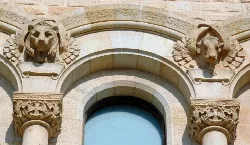
Lion and lioness sculptures on the church facade.
CastelldefelsBarcelona

What is the significance of the Church of Santa María in Castelldefels?

The Church of Santa María, located in the center of Castelldefels, is notable for its architectural design by Enric Sagnier, with construction beginning in 1903. It features a Latin cross layout and three apses, adorned with beautiful murals by painter Serrasanta, making it a key cultural landmark.

Church of Santa María For visitors ›

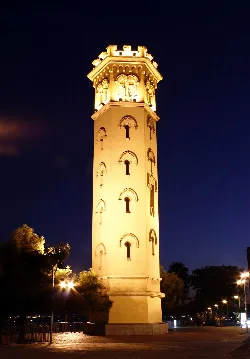
Night-lit Miranda Tower in Cornellá de Llobregat.
Cornellà de LlobregatBarcelona

What can you tell me about the Torre de la Miranda?

The Torre de la Miranda is a notable landmark in Cornellà de Llobregat, built in the late 19th century in a neo-Mudéjar style. It features a hexagonal shape and was constructed as a lookout point to observe the Llobregat plain and for astronomical studies. Its striking illumination at night makes it particularly attractive.

Torre de la Miranda For visitors ›

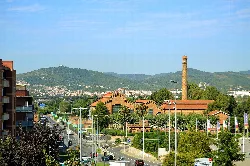
Building of the Museu Agbar de les Aigües with mountains and city in the background.
Cornellà de LlobregatBarcelona

What is the architectural style of the Museu Agbar de les Aigües?

The Museu Agbar de les Aigües is housed in a building that reflects modernist architectural styles. Originally built as a water pumping station, it has been transformed into a museum that showcases the history and importance of water in Barcelona, integrating historical and contemporary design elements.

Museu Agbar de les Aigües For visitors ›

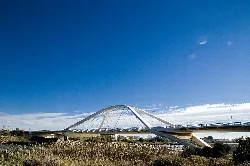
Nelson Mandela Bridge in El Prat de Llobregat under blue sky.
El Prat de LlobregatBarcelona

What is the Nelson Mandela Bridge and why is it important?

The Nelson Mandela Bridge in El Prat de Llobregat is a modern architectural landmark that connects different parts of the municipality. It symbolizes the town's commitment to progress and connectivity, enhancing transportation and accessibility while serving as a visual representation of the community's growth and development.

Nelson Mandela Bridge For visitors ›

El Prat de LlobregatBarcelona

What is the significance of the Casa Gomis in El Prat de Llobregat?

The Casa Gomis is a notable rationalist building in El Prat de Llobregat, attributed to architect Antoni Bonet. Located in La Ricarda, it represents the architectural heritage of the area and showcases the modernist style that was prominent in the early 20th century, making it an important cultural landmark.

Casa Gomis For visitors ›

EsparregueraBarcelona

What can you tell me about the Ermita de Puig?

The Ermita de Puig, or Iglesia de Santa María del Puig, is a Romanesque church located by the river Llobregat. Built around 1316, it was initially central to the village but fell into disuse after the town relocated. Today, it has been renovated and is used for communal meals during Holy Week, showcasing its cultural significance.

Ermita de Puig For visitors ›

EsparregueraBarcelona

What is the main church in Esparreguera?

The main church in Esparreguera is the Iglesia de Santa Eulalia, built in 1587 to replace the earlier Ermita de Santa María del Puig. This Gothic-style church features a single nave and a notable octagonal bell tower, making it a significant landmark in the town.

Iglesia de Santa Eulalia For visitors ›

Sant Miquel Church in Castellgalí, with tower and stone structure.
CastellgalíBarcelona

What is the Church of Saint Michael like?

The Church of Saint Michael in Castellgalí features two aisles, with a central nave that is wider than the side nave. It has a Neo-Gothic doorway and a quadrangular bell tower. The interior is adorned with chapels and decorative keystones, contributing to its historical and architectural significance in the old town.

Church of Saint Michael For visitors ›

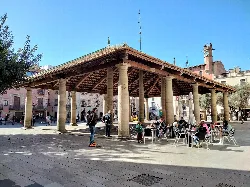
Wooden structure with stone columns in the main square of Granollers, with people sitting and walking.
GranollersBarcelona

What is La Porxada in Granollers?

La Porxada is a Renaissance building in Granollers, constructed between 1586 and 1587. It was originally used to store grain during market days and features fifteen Tuscan columns supporting a four-sloped roof. This iconic structure is a key landmark in the city and has undergone several restorations over the years.

La Porxada For visitors ›