Sights

3,246 questions

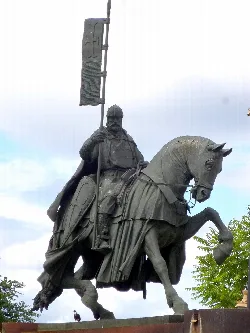
Statue of a Templar knight on horseback at Ponferrada's roundabout.
PonferradaLeón

What can I see at the Glorieta del Caballero Templario?

The Glorieta del Caballero Templario is a notable landmark in Ponferrada, featuring a statue of a Templar knight. This site commemorates the historical significance of the Templars in the region, particularly their role in the town's development during the Middle Ages. It's a great spot for photos and to reflect on the area's rich history.
Glorieta del Caballero Templario For visitors ›

PonferradaLeón

What is the significance of the Castle of Ponferrada?

The Castle of Ponferrada is a historic fortress that played a crucial role during the Middle Ages, particularly for the Knights Templar. It symbolizes the town's medieval heritage and has been well-preserved, attracting visitors interested in history and architecture. The castle offers stunning views of the surrounding area as well.

For visitors ›

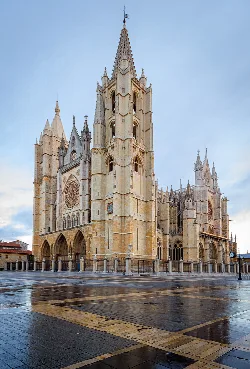
Gothic cathedral tower and facade with ornate details in León.
LeónLeón

What is the Cathedral of Our Lady of Regla known for?

The Cathedral of Our Lady of Regla, located in León, is renowned for its Rayonnant Gothic architecture. Built between the 13th and 15th centuries, it features one of the largest and best-preserved collections of medieval stained glass in Europe, covering at least 1,764 square meters. This stunning cathedral is a prime example of French-style Gothic architecture in Spain.

Cathedral of Our Lady of Regla For visitors ›

LeónLeón

What can you tell me about the Basilica of San Isidoro?

The Basilica of San Isidoro is a significant Romanesque church in León, built during the 11th and 12th centuries. It is notable for its subterranean Royal Pantheon, which contains 12th-century painted murals that are exceptionally well-preserved. The basilica is also the resting place of León's medieval monarchs, adding to its historical importance.

Basilica of San Isidoro For visitors ›

LeónLeón

What is the significance of the Roman Walls in León?

The Roman Walls of León, built between the 1st century BC and the 4th century AD, are a remarkable historical feature of the city. Many sections still stand today, providing insight into the city's ancient past. These walls were originally constructed to protect the Roman military encampment and have been preserved as a testament to León's rich history.

Roman Walls For visitors ›

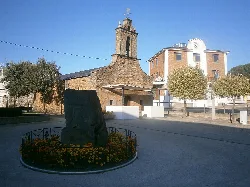
San Roque Chapel and town hall with trees and monument in the foreground.
Cubillos del SilLeón

What is the Ermita de San Roque in Cubillos del Sil?

The Ermita de San Roque is a small chapel located near the town hall of Cubillos del Sil. It features a modest interior with a retablo dedicated to San Roque, the patron saint of the chapel. This site is significant for local culture and is often associated with community events and celebrations.

Ermita de San Roque For visitors ›

Cubillos del SilLeón

What is the Castro de Fresnedo?

The Castro de Fresnedo is an ancient Asturian fortification located north of Fresnedo in Cubillos del Sil. It features defensive walls and a moat, providing insight into the region's prehistoric settlement and military architecture.

Castro de Fresnedo For visitors ›

Páramo del SilLeón

What are the main attractions in Páramo del Sil?

Páramo del Sil is known for its stunning natural landscapes, particularly the surrounding mountains like Miro and Catoute. Visitors can explore the rich flora and fauna, including protected bird species and diverse wildlife. The area also features historical sites, such as remnants of the ancient Asturian settlements and the medieval monastery of San Andrés de Espinareda.

For visitors ›

Páramo del SilLeón

What can you tell me about the architecture in Páramo del Sil?

Páramo del Sil features traditional architecture, including stone constructions known as cortíns, which were used to protect beehives. The area also has historical mills and cabanos, which served as shelters for shepherds. These structures reflect the region's agricultural heritage and cultural identity.

For visitors ›

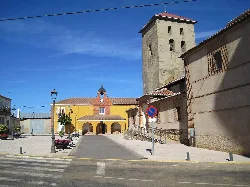
Main square with church and tower in Bercianos del Páramo.
Bercianos del PáramoLeón

What can you tell me about the Plaza Mayor in Bercianos del Páramo?

The Plaza Mayor is a central square in Bercianos del Páramo, characterized by its vibrant atmosphere and local architecture. It serves as a gathering place for residents and visitors alike, often hosting community events and celebrations. The square is surrounded by notable buildings, including the town hall, making it a focal point for social activities in the municipality.

Plaza Mayor For visitors ›

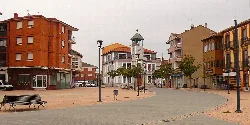
Square with clock, trees, and benches in La Robla, León.
La RoblaLeón

What can I see at the Plaza de la Constitución?

The Plaza de la Constitución is a central square in La Robla, characterized by its spacious layout and surrounding buildings. It serves as a gathering place for locals and visitors alike, often hosting events and festivities. The square is also a good spot to appreciate the architecture of nearby structures and enjoy the local atmosphere.

Plaza de la Constitución For visitors ›

La RoblaLeón

What can you tell me about the Acueducto de El Encañao?

The Acueducto de El Encañao is an 18th-century structure that is believed to occupy the site of a former Roman aqueduct. Restored in 2002, it features significant historical value and was noted by Melchor Gaspar de Jovellanos in his diary for its impressive construction for the time.

Acueducto de El Encañao For visitors ›

SarriaLugo

What is Sarria known for?

Sarria is primarily recognized as the starting point for the last 100 kilometers of the Camino de Santiago, a popular pilgrimage route. It features historical landmarks such as the Torre de Fortaleza and the Monastery of La Magdalena, which dates back to the 13th century. The town is also noted for its rich Romanesque heritage, with around 20 churches from that era.

For visitors ›

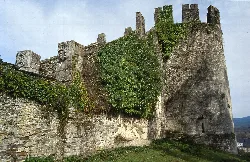
Castle with a fortress tower in Sarria, Lugo, with walls covered in vegetation.
SarriaLugo

What can I see at the Torre de Fortaleza de Sarria?

The Torre de Fortaleza de Sarria is a medieval tower that is the only remaining part of the original fortress. It stands about 14 meters tall and features a vaulted interior. Visitors can access the top via a modern staircase, offering a glimpse into the town's historical significance and stunning views of the surrounding area.

Torre de Fortaleza de Sarria For visitors ›

Ribas de SilLugo

What is the architectural style of the Church of Santa María de Torbeo?

The Church of Santa María de Torbeo is a fine example of late Romanesque architecture, likely built at the end of the 13th century. Although it suffered damage from a fire in 1936, it retains elements of its original design, including walls and the apse, showcasing the historical significance of the site.

Igrexa de Santa María de Torbeo For visitors ›

ViveiroLugo

What are the main attractions to see in Viveiro?

Viveiro boasts a rich cultural heritage, featuring historical monuments and beautiful natural landscapes. Key attractions include the medieval architecture in the old town, the Ría de Viveiro, and the nearby beaches like Playa de Covas. Additionally, the Souto da Retorta, a natural park with ancient eucalyptus trees, is a must-visit for nature lovers.

For visitors ›

MondoñedoLugo

What can you tell me about the Cathedral of Mondoñedo?

The Cathedral of Mondoñedo, constructed between 1230 and 1248, features a Romanesque entrance and a Gothic rose window from the 13th century. Inside, you'll find murals from the 14th century depicting biblical scenes. The museum 'Santos San Cristóbal' showcases archaeological artifacts and liturgical objects, making it a significant cultural site in the town.

Catedral de Mondoñedo For visitors ›

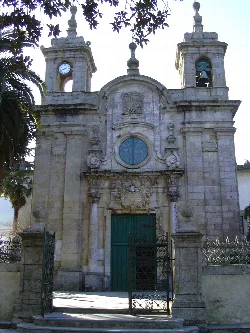
Stone facade with bell towers and clock in Mondoñedo.
MondoñedoLugo

What are the main features of the Santuario de los Remedios?

The Santuario de los Remedios, built in the mid-18th century, is known for its stunning Baroque architecture. It features a Latin cross layout and is located at the entrance of Mondoñedo. The sanctuary is an important religious site, housing beautiful altarpieces and attracting many visitors each year.

Santuario de los Remedios For visitors ›

MondoñedoLugo

What are the main attractions in the historic center of Mondoñedo?

The historic center of Mondoñedo is rich in attractions, including the Cathedral, the Palacio Episcopal, and various charming plazas. The area is recognized as a historic-artistic ensemble, showcasing beautiful architecture and inviting visitors to explore its narrow streets and historical buildings.

For visitors ›

CarballedoLugo

What are the notable architectural features of the Pfarrkirche San Miguel de Buciños?

The Pfarrkirche San Miguel de Buciños, built at the end of the 18th and beginning of the 19th centuries, houses the ashes of San Pegerto. Its interior features a blend of traditional design elements, making it an important site for both worship and local heritage.

Pfarrkirche San Miguel de Buciños For visitors ›

TaboadaLugo

What can you tell me about the architecture in Taboada?

Taboada features a rich array of Romanesque architecture, with seven notable churches built between the 12th and 13th centuries. Key examples include the Church of San Pedro de Bembibre, which houses a significant retablo and frescoes, and the Church of Santa María de Taboada dos Freires, known for its templar origins. These structures reflect the area's historical and cultural significance.

For visitors ›

TaboadaLugo

What is the Casa da Torre de Moreda?

The Casa da Torre de Moreda is a historically significant building in Taboada, originally designed as a tower. It has undergone numerous modifications over time and is believed to be one of the earliest human settlements in the area, as evidenced by the discovery of anthropomorphic tombs within its grounds.

Casa da Torre de Moreda For visitors ›

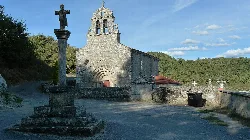
Stone church facade with a crucifix in front.
TaboadaLugo

Where is the Church of San Pedro de Bembibre located?

The Church of San Pedro de Bembibre is situated about one kilometer from the pazo-fortaleza of the Condes de Taboada. This Romanesque church features a rectangular layout and a semicircular apse, showcasing an interesting retablo and well-preserved frescoes, making it a key historical site in Taboada.

Igrexa de San Pedro de Bembibre For visitors ›

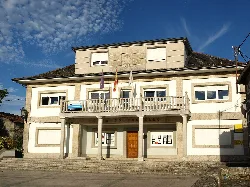
Town hall building of Taboada with flags on the facade.
TaboadaLugo

What is the Casa do Concello de Taboada?

The Casa do Concello de Taboada serves as the town hall and is an important civic building in the municipality. It reflects the architectural style of the area and functions as the administrative center for local governance, hosting various community events and services.

Casa do Concello de Taboada For visitors ›