Sights

3,246 questions

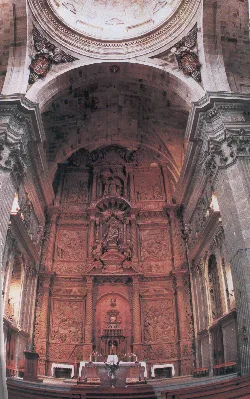
Wooden altarpiece with religious scenes and sculptures in Monforte de Lemos.
Monforte de LemosLugo

What is the significance of the Retablo de Nuestra Señora de La Antigua?

The Retablo de Nuestra Señora de La Antigua is a remarkable altarpiece created by the renowned artist Francisco de Moure. Located within the Colegio de Nuestra Señora de La Antigua, this artwork is celebrated for its intricate design and cultural significance, showcasing the artistic heritage of the region and attracting art enthusiasts and visitors alike.
Retablo de Nuestra Señora de La Antigua For visitors ›

XoveLugo

What are the main attractions in Xove?

Xove boasts several notable attractions, including the Petroglyphe von Monte, the Steinkreis von Lavandeiras, and the Mámoa von Guilán. Additionally, there are nine Castros, with the Castro de San Tirso being particularly significant. These historical sites reflect Xove's rich prehistoric and Roman heritage, making it a fascinating destination for history enthusiasts.

For visitors ›

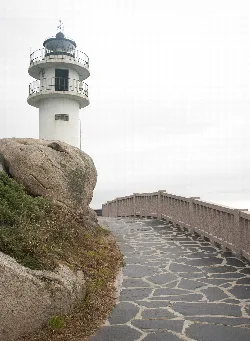
Stone pathway with railing leading to a lighthouse on the coast of Xove.
XoveLugo

What is the lighthouse at Punta Roncadoira?

The lighthouse at Punta Roncadoira is a notable landmark in Xove, situated on a scenic coastal path. It serves as a navigational aid for vessels in the area and offers picturesque views of the surrounding landscape. The access way to the lighthouse is a popular spot for visitors seeking to enjoy the coastal scenery.

Punta Roncadoira For visitors ›

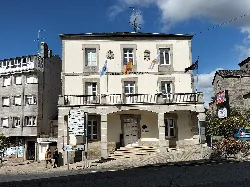
Town hall building of Monterroso with flags on the facade.
MonterrosoLugo

What is the Casa consistorial de Monterroso?

The Casa consistorial de Monterroso serves as the town hall and is a notable building in the municipality. It reflects the administrative center of Monterroso, where local governance takes place. The architecture showcases a blend of functionality and local style, making it an important landmark for residents and visitors alike.

Casa consistorial de Monterroso For visitors ›

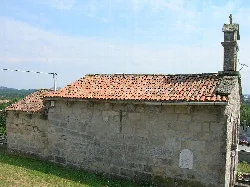
Small stone church with red tiled roof and chimney in the corner.
MonterrosoLugo

What can you tell me about the Iglesia de San Martiño de Cumbraos?

The Iglesia de San Martiño de Cumbraos is a significant Romanesque church located in Monterroso. It is known for its architectural beauty and historical importance, reflecting the region's rich cultural heritage. The church is one of several Romanesque structures that highlight the influence of the Camino de Santiago in the area.

Iglesia de San Martiño de Cumbraos For visitors ›

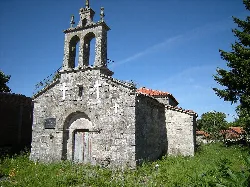
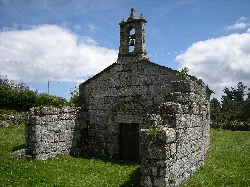
Stone church with bell tower in Antas de Ulla, Lugo, Galicia.
Antas de UllaLugo

What is the Igrexa de San Xoán de Antas de Ulla?

The Igrexa de San Xoán de Antas de Ulla is a parish church located in the municipality of Antas de Ulla. It serves as a significant religious and cultural landmark within the community, reflecting the architectural styles and historical influences of the region. The church is part of the rich heritage of Antas de Ulla, which includes various historical sites and structures.

Igrexa de San Xoán de Antas de Ulla For visitors ›

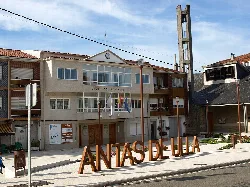
Town hall square in Antas de Ulla with large sign and bell tower.
Antas de UllaLugo

What can you tell me about the Praza do Concello in Antas de Ulla?

Praza do Concello is the central square in Antas de Ulla, serving as a hub for community activities and local events. It is surrounded by important municipal buildings and offers a space for residents and visitors to gather. The square reflects the town's character and is an excellent spot to experience local life.

Praza do Concello For visitors ›

Antas de UllaLugo

What is the significance of the Burgruine Amarante?

The Burgruine Amarante is a historical castle ruin built in the 13th century by the Noguerol family. It is linked to local legends, including tales of underground passages. The site reflects the medieval history of Antas de Ulla and is recognized as a Cultural Heritage site, showcasing the architectural styles of its time.

Burgruine Amarante For visitors ›

LáncaraLugo

What are the main attractions in Láncara?

Láncara boasts several historical sites, including the Carracedo Bridge, which has Roman origins and features medieval architecture. The Herrenhaus Láncara, a former fortress turned palace, is also notable for its rich history. Additionally, the Casa Grande de A Pobra de San Xiao showcases traditional Galician architecture and is surrounded by beautiful landscapes.

For visitors ›

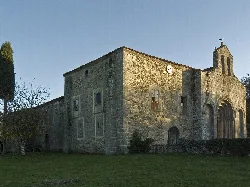
San Paio de Diomondi church in Saviñao, Lugo, Galicia.
O SaviñaoLugo

What can I see at the Iglesia de San Paio de Diomondi?

The Iglesia de San Paio de Diomondi is an ancient monastery located in O Saviñao. This historic church features Romanesque architecture and is known for its beautiful façade and intricate details. Visitors can appreciate its historical significance and explore the surrounding area, which is rich in cultural heritage.

Iglesia de San Paio de Diomondi For visitors ›

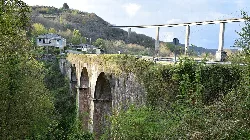
Stone bridge and modern bridge in Becerreá, Lugo.
BecerreáLugo

What can you tell me about the Brücke von Cruzul?

The Brücke von Cruzul, built in the 18th century, features three semicircular arches made of uniform limestone. It was initially part of the National Road N-VI until the late 1960s. This bridge is notable for its neoclassical design and served as an important infrastructure link between Lugo and Madrid. It was designed by engineer Carlos Lemaur and is recognized for its historical significance during the Napoleonic invasions.

Brücke von Cruzul For visitors ›

BecerreáLugo

What makes the Brücke von Gatín historically significant?

The Brücke von Gatín, spanning the Navia River, dates back to the 11th-13th centuries. While it differs from typical Roman bridge designs, it has undergone various renovations over time. Its historical significance lies in its role as part of the old road connecting Ambasmestas and Becerreá, still serving local farms today, despite not being part of the main road network.

Brücke von Gatín For visitors ›

Small stone church with bell tower and old walls in Valle de Oro, Lugo.
O ValadouroLugo

What can you tell me about the Kapelle Santa Filomena?

The Kapelle Santa Filomena, built in the 11th century, is one of the oldest chapels in the region. It showcases early Galician rural Romanesque architecture and features a preserved altar area along with gothic paintings from the 16th century. It was constructed following a gift from King Ordoño II to the Diocese of Britonia.

Kapelle Santa Filomena For visitors ›

O ValadouroLugo

Can you describe the architecture of the Pfarrkirche San Xurxo do Cadramón?

The Pfarrkirche San Xurxo do Cadramón, built in 1860, features a rectangular nave with a square altar area. It includes a side portico supported by five pillars and a prominent bell tower. The church's design reflects a blend of classical and local architectural styles.

Pfarrkirche San Xurxo do Cadramón For visitors ›

O ValadouroLugo

What is the significance of the Casa Torre de Parga?

The Casa Torre de Parga is a notable historical site in O Valadouro, linked to the Irmandin Revolt of the 15th century. Once owned by Marshal Pardo de Cela, it has undergone various modifications over the years and is currently classified as an Asset of Cultural Interest.

Casa Torre de Parga For visitors ›

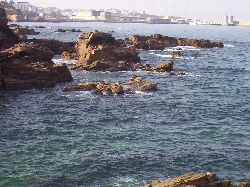
Rocks in the water at Burela port with the city in the background.
BurelaLugo

What is the significance of the Puerto de Burela?

The Puerto de Burela is a crucial fishing port on the Cantabrian coast, supporting a large fleet of fishing boats. It plays a vital role in the local economy, facilitating both fishing and commercial activities. The port is also a focal point for local festivals, particularly the Fiesta del Bonito, which celebrates the region's fishing heritage.

Puerto de Burela For visitors ›

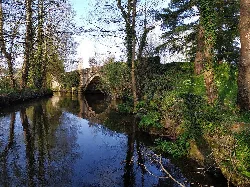
Stone bridge over the river in Alfoz, Lugo, surrounded by trees and greenery.
Alfoz do CastrodouroLugo

What can you tell me about the Ponte Nova?

The Ponte Nova, dating back to the 18th century, spans the river Ouro. Constructed from granite, it features three distinctive arches, including a pronounced ajimezado arch. Originally serving as a vital route between Mondoñedo and Ferreira, it has been replaced by a modern bridge due to increased traffic. The bridge's design is notable for its elegant arches and low parapet.

Ponte Nova For visitors ›

Main facade of Rizal Manor with wall, balconies, and chapel in Alfoz.
Alfoz do CastrodouroLugo

How is the Pazo de Rizal architecturally unique?

The Pazo de Rizal, built in the 18th century, showcases a rectangular central structure with two floors and a four-pitched roof. Its façade features a distinctive wrought iron balcony and is surrounded by a protective stone wall. The complex includes a chapel, patio, and several outbuildings, reflecting the traditional Galician pazo style and its historical significance.

Pazo de Rizal For visitors ›

Alfoz do CastrodouroLugo

What is the Pazo de Carrocide known for?

The Pazo de Carrocide, built in 1686, is notable for its Casa-Pazo architecture, featuring two entrance arches and a chapel. Its structure includes two tower-like bodies and a rectangular body, all built with carefully crafted stone. The interior retains 19th-century furnishings, showcasing the historical lifestyle of the region's nobility.

Pazo de Carrocide For visitors ›

Stone castle with towers and walls in a green setting in Alfoz.
Alfoz do CastrodouroLugo

What is the Museo de las Zocas about?

The Museo de las Zocas, located in the Castillo de Castro de Ouro, showcases the traditional craft of making zocas, a type of wooden footwear. Established in 2015, it features a collection of zocas and live demonstrations by the last active zoqueiro in Lugo. The museum highlights the cultural heritage and craftsmanship of the region.

For visitors ›

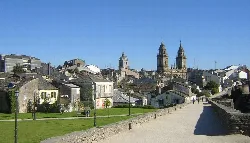
View of the city walls and cathedral of Lugo from the promenade.
LugoLugo

What is the significance of the Roman wall in Lugo?

The Roman wall of Lugo is a UNESCO World Heritage site, recognized for being the only Roman fortification in the world that retains its complete original perimeter. Built in the 3rd century, it encompasses the city center and is a testament to Lugo's rich Roman history.

Muralla For visitors ›

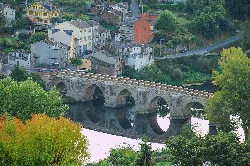
Roman bridge of Lugo over the river, surrounded by greenery and houses.
LugoLugo

Can you tell me about the Ponte Romana de Lugo?

The Ponte Romana de Lugo is a historic Roman bridge that spans the river Miño. It reflects the engineering prowess of the Romans and is an important landmark in the city, showcasing the ancient connections between different parts of the region.

Ponte Romana For visitors ›

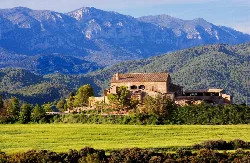
Catalan farmhouse in La Baronia de Rialb with mountains in the background.
La Baronia de RialbLleida

What is the typical Catalan house shown in the photo?

The photo depicts the Masia típica catalana de Heretat de Guàrdia, a traditional Catalan farmhouse located in La Baronia de Rialb. These farmhouses are characteristic of the region, often featuring rustic architecture and surrounded by beautiful landscapes, reflecting the agricultural heritage of Catalonia.

For visitors ›

La Baronia de RialbLleida

What historical sites should I visit in La Baronia de Rialb?

Visitors to La Baronia de Rialb should explore the Monastery of Santa María de Gualter and the Romanesque churches, such as Santa Eulalia de Pomañons and Sant Girvés. These sites reflect the rich historical and architectural heritage of the region, offering insights into its past.

For visitors ›