Sights

3,246 questions

Alcolea de TajoToledo

What is the significance of the Camino Real de Guadalupe?

The Camino Real de Guadalupe is a historic pilgrimage route that passes through Alcolea de Tajo. It has been a significant path for nobles and kings, enhancing the town's cultural heritage and attracting tourism.
Camino Real de Guadalupe For visitors ›

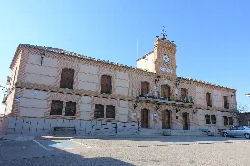
Town hall building with clock and flag on the facade.
CarmenaToledo

What is the Casa consistorial in Carmena?

The Casa consistorial is the town hall of Carmena, built in the 20th century with a historicist style. It features a symmetrical façade with two stories, three central portals, and a clock tower. The building is constructed from well-treated brick and toledano masonry, enhancing its architectural significance in the town.

Casa consistorial For visitors ›

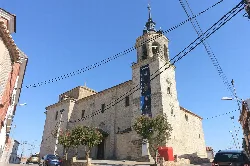
Stone church with tower and facade in Carmena, Toledo, Spain.
CarmenaToledo

What can you tell me about the Iglesia de Nuestra Señora de la Asunción?

The Iglesia de Nuestra Señora de la Asunción is a 16th-century Renaissance church in Carmena. It has a single nave divided into three sections and features a crypt below the altar. The church's architecture includes a dome over the crossing and a bell tower, showcasing a blend of historical styles.

Iglesia de Nuestra Señora de la Asunción For visitors ›

CarmenaToledo

What is the significance of the Ermita del Santo Sepulcro?

The Ermita del Santo Sepulcro is a small 19th-century chapel located outside Carmena. It features a Calvary that marks the end of a traditional Vía Crucis. This site holds historical and cultural importance for the community, especially during religious observances.

Ermita del Santo Sepulcro For visitors ›

CarmenaToledo

What can you tell me about the Casa de los Quevedo?

The Casa de los Quevedo is a historical mansion dating back to 1538, noted for its architectural features, including a rectangular plan and a façade adorned with a coat of arms. This building reflects the historical significance of noble families in the region.

Casa de los Quevedo For visitors ›

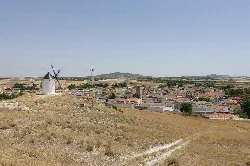
View of a windmill and a town in a rural landscape.
El RomeralToledo

What is the significance of the Molinos de Viento in El Romeral?

The Molinos de Viento, or windmills, are a defining feature of El Romeral, contributing to its traditional Manchego atmosphere. The Molino Pechuga is particularly notable as it was the last to cease operations for milling wheat. These windmills serve as a cultural landmark and are used for exhibitions during specific events, showcasing the region's agricultural heritage.

Molinos de Viento For visitors ›

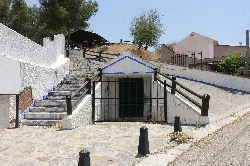
Stairs and a metal gate at the entrance of the ethnographic museum of El Romeral.
El RomeralToledo

What is the Museo Etnográfico in El Romeral like?

The Museo Etnográfico is located in an ancient cave and showcases traditional farming tools and household items that reflect the daily life of the village's past. This unique setting provides visitors with a glimpse into the historical practices and lifestyles of the residents, making it a valuable cultural resource for understanding El Romeral's heritage.

Museo Etnográfico For visitors ›

El RomeralToledo

What is the Iglesia de Nuestra Señora de la Asunción like?

The Iglesia de Nuestra Señora de la Asunción is one of the oldest buildings in El Romeral, featuring a Gothic vault and a rich history dating back to the late 15th century. Its architecture reflects the religious significance of the town, having served as a burial site and a central place of worship for centuries.

Iglesia de Nuestra Señora de la Asunción For visitors ›

El RomeralToledo

What is the significance of the Ermita de San Sebastián?

The Ermita de San Sebastián dates back to the 17th century and reflects the community's devotion to this saint, particularly during times of plague. Its construction features a beautiful Mudéjar coffered ceiling, showcasing the artistic heritage of the region and serving as a place of worship and cultural identity for the locals.

Ermita de San Sebastián For visitors ›

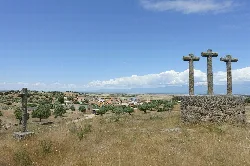
Three stone crosses in a field with trees and a village in the background.
Herreruela de OropesaToledo

What can you tell me about the Calvario in Herreruela de Oropesa?

The Calvario in Herreruela de Oropesa features three stone crosses that stand prominently on a hill. This site offers a scenic view of the village and the surrounding landscape, providing a peaceful atmosphere for visitors. It is a significant landmark that reflects the local culture and religious traditions of the area.

Calvario For visitors ›

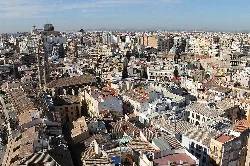
Cityscape with buildings and rooftops from a tall tower.
ValenciaValencia

What can I see from the Miguelete Tower?

The Miguelete Tower offers stunning panoramic views of Valencia. From its heights, you can see the historic city center, the Turia River, and the Mediterranean coastline. It's a great spot for photography and to appreciate the city's architecture, including the Cathedral and nearby landmarks. Climbing the tower provides a unique perspective of Valencia's urban landscape.

Miguelete Tower For visitors ›

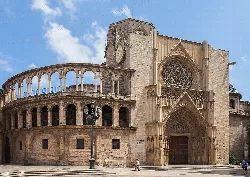
Facade of Valencia Cathedral with Gothic rose window and porch.
ValenciaValencia

What is the significance of Valencia's Cathedral?

Valencia's Cathedral, known as La Seu, is a significant landmark that showcases various architectural styles, including Gothic, Romanesque, and Baroque. It is home to the Holy Grail, according to local tradition. The Cathedral's stunning façade and intricate interiors attract many visitors, making it a must-see for anyone exploring Valencia's rich history and culture.

Valencia Cathedral For visitors ›

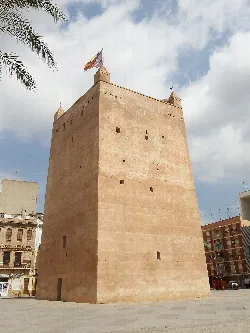
Arab tower of Torrente with flags on top and a cloudy sky.
TorrentValencia

What is the Torre árabe de Torrente?

The Torre árabe de Torrente is a historical tower that reflects the Islamic influence on the region. Built during the Muslim period, it showcases the architectural style of that era. The tower is a significant landmark in Torrent, symbolizing its rich cultural heritage and history.

Torre árabe de Torrente For visitors ›

GandiaValencia

What are the main attractions in Gandía?

Gandía offers several notable attractions, including the impressive Palacio Ducal, which is the birthplace of Saint Francis Borgia. You can also visit the historic Colegiata de Santa María, the Ayuntamiento with its neoclassical facade, and the beautiful beaches along the Mediterranean coast. Additionally, the city features cultural routes dedicated to the Borja family and various festivals throughout the year.

For visitors ›

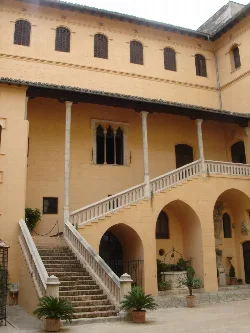
Facade of the Ducal Palace with stairs and columns in Gandía.
GandiaValencia

What is the significance of the Palacio Ducal in Gandía?

The Palacio Ducal is a key historical landmark in Gandía, serving as the birthplace of Saint Francis Borgia. It features a mix of architectural styles and has undergone numerous restorations. The palace is notable for its Gothic Patio de Armas and the Gallery of Gold, showcasing the city's noble heritage and cultural history.

Palacio Ducal For visitors ›

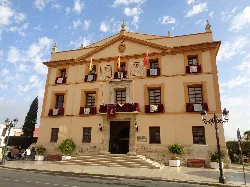
Building with flags and stairs at the entrance, town hall in Paterna.
PaternaValencia

What is the Palau dels Comtes de Villapaterna?

The Palau dels Comtes de Villapaterna is a lordly palace built in 1760 by the Counts of Villapaterna. It now serves as the town hall of Paterna, having been acquired by the city council in 1983. Its architecture reflects the historical significance of the area and is a notable landmark in the municipality.

Palau dels Comtes de Villapaterna For visitors ›

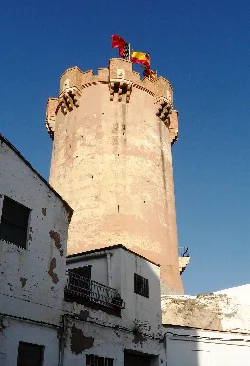
Paterna tower with flags at the top, viewed from below.
PaternaValencia

Can you tell me about the Torre de Paterna?

The Torre de Paterna is a cylindrical tower of Arab origin, standing at 19.5 meters tall. It was strategically built for defense and offers excellent visibility of the surrounding area. Its historical significance and architectural features make it a prominent landmark in Paterna.

Torre de Paterna For visitors ›

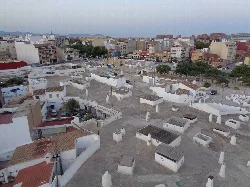
View of rooftops and buildings from a tower in Paterna.
PaternaValencia

What can you see from the Torre de Paterna?

From the Torre de Paterna, visitors can enjoy panoramic views of the surrounding area, including the urban landscape and nearby hills. The vantage point provides a unique perspective of Paterna and its surroundings, making it a popular spot for photography and sightseeing.

Torre de Paterna For visitors ›

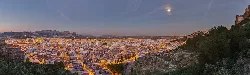
Panoramic sunset view of Sagunto from the castle hill.
SaguntoValencia

What can I see from the castle in Sagunto?

From the castle in Sagunto, you can enjoy breathtaking views of the former Roman city, especially stunning at sunset. The panoramic vista showcases the city's layout, the surrounding landscape, and the Mediterranean coast, making it a perfect spot for photography and sightseeing.

castle For visitors ›

SaguntoValencia

Is there any notable architecture in Sagunto?

Yes, Sagunto is home to significant architectural landmarks, including the Roman theater and the castle. The Roman theater, which could accommodate around 8,000 spectators, showcases the city's ancient history and architectural prowess.

Roman theater For visitors ›

AlziraValencia

What are some historical landmarks in Alzira?

Alzira boasts several historical landmarks, including the arciprestal church of Santa Catalina, the Casa Consistorial, and the remnants of its ancient walls. The Cruz Cubierta and the monastery of Santa María de la Murta are also significant, reflecting the city's rich historical and cultural heritage.

For visitors ›

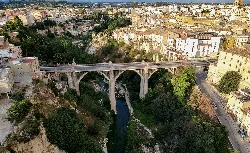
Large bridge over a river with vegetation and buildings in Ontinyent.
OntinyentValencia

What is the significance of the Puente de Santa María in Ontinyent?

The Puente de Santa María is an important engineering structure that connects the city center with a populous neighborhood. It spans the Clariano River and is notable for its historical significance and architectural design. The bridge enhances connectivity in the area and is a popular spot for photographs.

Puente de Santa María For visitors ›

OntinyentValencia

What historical sites can I visit in Ontinyent?

In addition to the Iglesia de Santa María, Ontinyent boasts several historical sites including the Convento de Carmelitas, the Puente Viejo, and the remains of the medieval castle. Each site reflects the town's rich history from the Roman period through the Islamic and Christian conquests, offering a glimpse into its cultural heritage.

For visitors ›

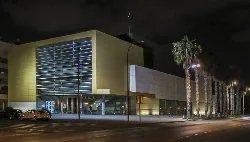
Modern building with lights and palm trees on the sidewalk at night.
AldaiaValencia

What can I find at the Teatre Auditori Municipal d'Aldaia?

The Teatre Auditori Municipal d'Aldaia (TAMA) serves as a cultural hub for the municipality, hosting a variety of performances and events. It features a modern design and is utilized for concerts, theatrical productions, and community events, making it a key venue for local cultural activities.

Teatre Auditori Municipal d'Aldaia For visitors ›