Sights

3,246 questions

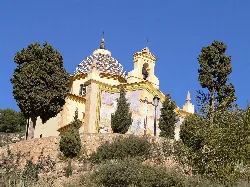
Calvary Hermitage in Alcora with decorated dome and trees.
L'AlcoraCastellón

What is the Ermitorio del Calvario?

The Ermitorio del Calvario is a local religious site in Alcora, dating back to the 16th or 17th century. It has undergone renovations, notably in 1774. The structure features a balcony-like platform, a rounded apse, and rococo interior decorations, making it a significant cultural landmark in the area.
Ermitorio del Calvario For visitors ›

MoncofaCastellón

What are the main attractions to see in Moncofa?

Moncofa boasts several attractions, including the Torre Vigía de Beniesma, a historical watchtower with remnants visible at the beach. The Ermita Santa María Magdalena, built in the 16th century, is also significant. Additionally, the local beaches and the scenic Plana de Castellón offer beautiful landscapes for visitors to enjoy.

For visitors ›

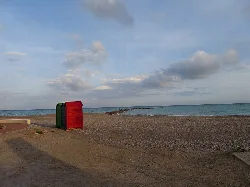
Beach cabins on the sand with the sea and sky in the background.
AlmenaraCastellón

What is the significance of the Playa de Casablanca?

Playa de Casablanca is notable for its 4 km stretch of sandy and gravel beach, named after a historic estate. It features one of the best-preserved dune systems in Castellón, which supports unique endemic plant species and is crucial for the nesting of the black-bellied plover.

Playa de Casablanca For visitors ›

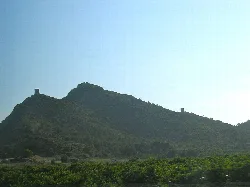
View of Almenara Castle from the north, with walls and towers on the hilltop.
AlmenaraCastellón

What kind of historical sites can I visit in Almenara?

In Almenara, visitors can explore the remnants of the Castillo de Almenara, which dates back to the medieval period, and the restored walls from the 14th century. These sites reflect the town's rich history and architectural heritage.

For visitors ›

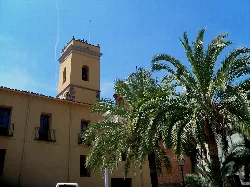
Tower and palm trees in the Plaza dels Dolçainers in Tales.
TalesCastellón

What can I see in the Plaza dels Dolçainers?

The Plaza dels Dolçainers is a notable spot in Tales, celebrating the town's rich musical tradition, particularly the dulzaina and tabal. It features a monolith honoring the dulzaineros, reflecting the cultural significance of this musical heritage. The plaza often hosts events and gatherings, making it a lively part of the community.

Plaza dels Dolçainers For visitors ›

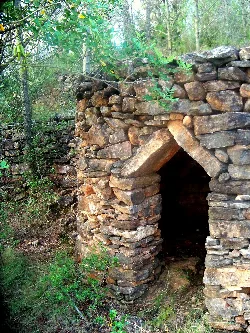
Dry stone shelter with triangular arch in Tales, Castellón, Spain.
TalesCastellón

What can you tell me about the dry stone shelter in Tales?

The dry stone shelter in Tales is a notable example of traditional architecture, featuring an entrance topped by two slabs forming a triangular arch. This structure reflects the local building techniques and materials used in the region, showcasing the historical significance of such shelters in rural life.

dry stone shelter For visitors ›

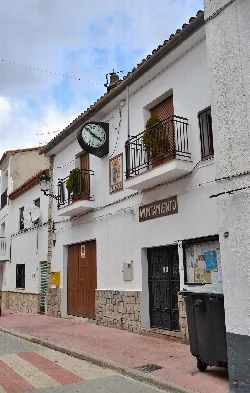
White building with clock and sign, on the main street of Barracas.
BarracasCastellón

What can I see at the Ajuntament de Barracas?

The Ajuntament de Barracas is the town hall and a notable building in the municipality. It's a charming structure that reflects the local architecture and serves as a hub for the town's administration and community activities, making it an interesting spot for visitors to explore.

Ajuntament de Barracas For visitors ›

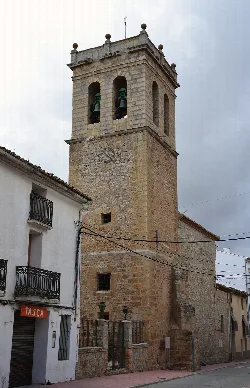
Stone bell tower with clock and bells in Barracas.
BarracasCastellón

What is the significance of the Campanar de l'església de Sant Pere?

The Campanar de l'església de Sant Pere is the bell tower of the local church and an important landmark in Barracas. It represents the town's cultural and religious heritage, serving as a focal point for community gatherings and events.

Campanar de l'església de sant Pere de Barraques For visitors ›

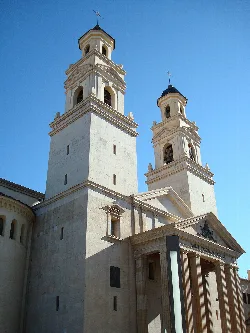
Facade of a basilica with two towers and columns in Villarreal.
VillarrealCastellón

What is the Basilica of San Pascual Baylón known for?

The Basilica of San Pascual Baylón is significant as it houses the remains of the saint and features a striking sarcophagus of dark granite. The church is known for its impressive baroque decoration and a retablo with 14 figures related to the Eucharist and San Pascual. It also has two towers with a total of 84 bells, making it a notable landmark in Villarreal.

Basilica For visitors ›

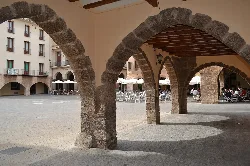
Stone arches in Villarreal's Plaza de la Villa.
VillarrealCastellón

What can you tell me about the Plaza de la Villa?

Plaza de la Villa is a historic square that retains the essence of Villarreal's medieval architecture. It features a porticoed design with various types of arcades, reflecting the town's rich history. This square was central to the original layout of Villarreal, established in 1274, and remains a significant cultural hub today.

Plaza de la Villa For visitors ›

Castellón de la PlanaCastellón

What can I see in Castellón de la Plana?

Castellón de la Plana offers a variety of sights, including its historic center with medieval architecture, the iconic Torre Campanario, and the beautiful 8.6 km stretch of the Costa del Azahar. The city also features cultural institutions like the Museum of Fine Arts, which showcases local art and history.

For visitors ›

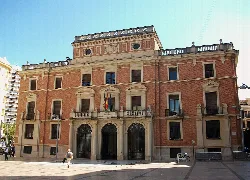
Red building with columns and flags at the entrance.
Castellón de la PlanaCastellón

What is the Edificio de la Diputación Provincial?

The Edificio de la Diputación Provincial is a notable building in Castellón de la Plana, serving as the seat of the provincial government. Its architecture reflects the city's administrative significance and is an important landmark for understanding local governance and history.

Edificio de la Diputación Provincial For visitors ›

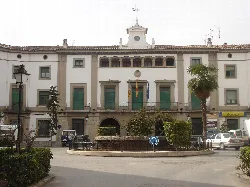
Town hall building with flags and fountain in the square.
ViverCastellón

What does the Ayuntamiento de Viver look like?

The Ayuntamiento de Viver, or Town Hall, is a prominent building characterized by its white facade and green shutters. It serves as the administrative center of the town, reflecting the local architectural style and the community's commitment to maintaining its heritage.

Ayuntamiento de Viver For visitors ›

Puebla de AlmenaraCuenca

What are the main attractions in Puebla de Almenara?

Puebla de Almenara features several notable attractions, including the Castle, the Church of the Assumption, and the Ermita de la Misericordia. The castle showcases medieval architecture, while the church contains a significant funerary sculpture of Don Juan de Cuenca. The Ermita is known for its Baroque retablo and patron saint celebrations.

For visitors ›

Puebla de AlmenaraCuenca

What can you tell me about the Ermita de la Misericordia?

The Ermita de la Misericordia, located on the outskirts of Puebla de Almenara, features a Baroque retablo and serves as a significant religious site. It is dedicated to the Virgen de la Misericordia, whose feast is celebrated annually, attracting many pilgrims and visitors.

Ermita de la Misericordia For visitors ›

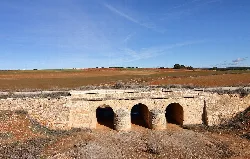
Stone bridge with three arches in a landscape of fields and blue sky.
Motilla del PalancarCuenca

What is the Puente de los Tres Ojos in Motilla del Palancar?

The Puente de los Tres Ojos is a notable bridge in Motilla del Palancar, known for its unique architecture featuring three arches. This structure is significant for its historical role in connecting various regions and facilitating transportation. The bridge is an important landmark, reflecting the town's heritage and engineering from its past.

Puente de los Tres Ojos For visitors ›

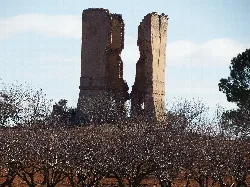
Ruins of an optical telegraph tower in Motilla del Palancar.
Motilla del PalancarCuenca

What is the Torre de telegrafía óptica in Motilla del Palancar?

The Torre de telegrafía óptica is a historical optical telegraph tower located in Motilla del Palancar. It served as a communication point in the past, reflecting the technological advancements of its time. The tower is an important part of the town's heritage and offers insight into the history of communication in the region.

Torre de telegrafía óptica For visitors ›

Motilla del PalancarCuenca

Is there any notable architecture in Motilla del Palancar?

Yes, the Iglesia de San Gil Abad is a significant architectural site in Motilla del Palancar. Originally built in the 16th century, it showcases a blend of Gothic and Renaissance styles. The church's design features elegant arches and a harmonious layout, making it one of the finest examples of its period in the province.

Iglesia de San Gil Abad For visitors ›

Villanueva de la JaraCuenca

What is the significance of the Plaza Mayor in Villanueva de la Jara?

Plaza Mayor is the central hub of Villanueva de la Jara, featuring the 16th-century Renaissance Ayuntamiento and the historic Posada Massó. The square is also home to Villa Enriqueta, a palatial house from the 19th century. This area serves as a focal point for community events and gatherings.

Plaza Mayor For visitors ›

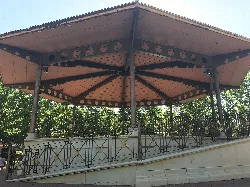
Music pavilion in Tarancón with iron structure and wooden roof.
TarancónCuenca

What is the Templete de música in Tarancón used for?

The Templete de música in Tarancón serves as a venue for outdoor concerts and cultural events. It is a charming structure located in a park, providing a lovely setting for community gatherings and performances, enhancing the town's cultural life.

Templete de música For visitors ›

TarancónCuenca

What are the main attractions in Tarancón?

Key attractions in Tarancón include the Iglesia de Nuestra Señora de la Asunción, the Virgen de Riánsares sanctuary, and the historic Arco de la Malena. The town also features parks and cultural venues like the Casa de Cultura and the Museo de arte contemporáneo.

For visitors ›

TarancónCuenca

What is the significance of the Arco de la Malena?

The Arco de la Malena is a historical arch that served as an entrance to the town's former fortified walls, dating back to the 11th century. It now stands as a notable landmark leading to the Iglesia de Nuestra Señora de la Asunción, reflecting Tarancón's rich history.

Arco de la Malena For visitors ›

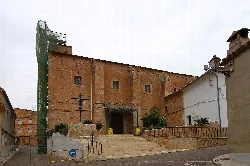
Facade of the parish church of San Pedro Advíncula in Villalpardo.
VillalpardoCuenca

What can you tell me about the Iglesia parroquial de San Pedro Advíncula?

The Iglesia parroquial de San Pedro Advíncula is a rectangular church built in the 16th and 17th centuries. It features a single nave with a combination of Renaissance and Baroque styles. The church is constructed with masonry and has a Gothic baptismal font. Notably, its simple exterior includes a flat arch entrance and a bell tower with three openings.

Iglesia parroquial de San Pedro Advíncula For visitors ›

VillalpardoCuenca

What is the significance of the Puente de Vadocañas?

The Puente de Vadocañas is a notable stone bridge over the Río Cabriel, approximately 13 kilometers from Villalpardo. Known for its single arch and impressive size, it is one of the largest of its kind in Spain and Europe. Although often thought to be Roman, it was actually built in the late 16th or early 17th century.

Puente de Vadocañas For visitors ›