Sights

3,246 questions

MuniesaTeruel

What is the significance of the Ermita de la Virgen de la Aliaga?

The Ermita de la Virgen de la Aliaga is an important religious site located at the southern entrance of Muniesa. It features a beautiful brick façade and a dome adorned with popular paintings. The site is historically linked to local traditions and hosts annual pilgrimages, connecting the community to its cultural heritage.
Ermita de la Virgen de la Aliaga For visitors ›

MosqueruelaTeruel

What is Mosqueruela known for?

Mosqueruela is known for its rich history, stunning medieval architecture, and beautiful natural surroundings. It features well-preserved walls and historic sites like the Portal de San Roque and the Plaza Mayor. The town's elevation at 1471 m makes it one of the highest municipalities in Aragon, contributing to its unique climate and landscape.

For visitors ›

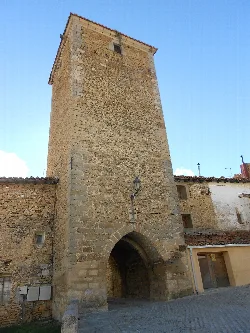
Stone gate with arch and tower in Mosqueruela.
MosqueruelaTeruel

What can I see at the Portal de San Roque?

The Portal de San Roque is an impressive main entrance to the town's medieval walls. It features a robust stone structure with a pointed arch and a tall tower, showcasing the architectural style of the period. This site offers a glimpse into Mosqueruela's historical defenses and is a popular spot for photography.

Portal de San Roque For visitors ›

Plaza Mayor with arches and cars in Mosqueruela, Teruel.
MosqueruelaTeruel

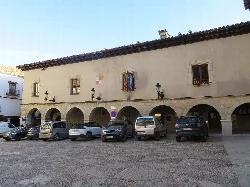
What are the main attractions in the Plaza Mayor?

The Plaza Mayor is a central hub in Mosqueruela, featuring the parish church and the town hall. The church, with its intricate architecture and historical significance, is a highlight. The square also serves as a gathering place for community events and festivals, making it a lively spot for visitors.

Plaza Mayor For visitors ›

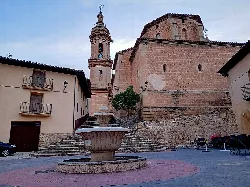
Plaza de España in Aguaviva with fountain and church tower.
AguavivaTeruel

What can I see in the Plaza de España in Aguaviva?

Plaza de España is a central square in Aguaviva, featuring a charming fountain and surrounded by historical buildings, including the impressive church of San Lorenzo. It's a great spot to relax and take in the local architecture and atmosphere. The square often serves as a gathering place for community events and celebrations.

Plaza de España For visitors ›

AguavivaTeruel

What is the Ermita de San Gregorio like?

The Ermita de San Gregorio is a hexagonal structure from the 17th century, built with local materials. It features an elegant pyramid-shaped roof and elliptical windows, showcasing unique architectural elements typical of the region's religious buildings.

Ermita de San Gregorio For visitors ›

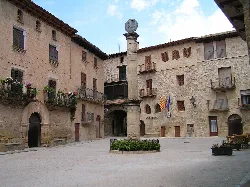
Square with stone buildings, a monument in the center, and flags on one side.
CretasTeruel

What is the significance of the Plaza Mayor in Cretas?

The Plaza Mayor, now known as Plaza de España, is the social heart of Cretas. It features a central column from 1584, originally intended for a town hall. The plaza showcases historical buildings, including the town hall and others dating back to the 15th century, reflecting Cretas' rich history and serving as a key gathering point for the community.

Plaza Mayor For visitors ›

CretasTeruel

What can you tell me about the Iglesia de la Asunción?

The Iglesia de la Asunción is a striking Manierist church in Cretas, built in the 16th century to replace an earlier temple. It features significant iconography, including figures of San Pedro and San Pablo, and was declared a cultural heritage site in 1983 after suffering damage during the Civil War. It remains the most notable building in Cretas today.

Iglesia de la Asunción For visitors ›

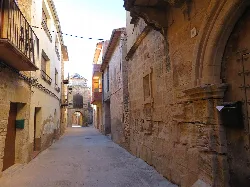
Narrow street with stone buildings and balconies in Cretas.
CretasTeruel

What is the Calle Mayor known for?

Calle Mayor is one of the oldest and historically significant streets in Cretas. It features the ancient Casa Sapera, linked to the prominent Sapera family. The street's layout is believed to date back to the Muslim period, with narrow alleys branching off from it, showcasing the town's historical architecture and charm.

Calle Mayor For visitors ›

CretasTeruel

What can I find at the Capilla de San Antonio de Padua?

The Capilla de San Antonio de Padua is a unique portal chapel in Cretas, originally part of the town's walls. Built in the mid-18th century, it honors San Antonio, revered for helping with impossible causes. The chapel's design reflects local architectural styles and is a significant cultural landmark in the area.

Capilla de San Antonio de Padua For visitors ›

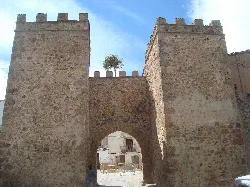
Arched gate in the wall of Manzanera with towers on each side.
ManzaneraTeruel

What can I see at the Castillo de Manzanera?

The Castillo de Manzanera features remnants of medieval architecture, including walls and towers that date back to the time of Muslim rule. It served as a strategic fortress before being taken by Pedro II of Aragón in 1202. The castle's ruins provide a glimpse into the historical significance of the area and its defensive past.

Castillo de Manzanera For visitors ›

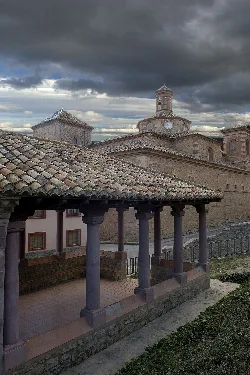
Tile roof and columns of a porch in the foreground, with the church and cloudy sky in the background.
Gea de AlbarracínTeruel

What is the Convento del Carmen like in Gea de Albarracín?

The Convento del Carmen, dating back to the 17th century, features a beautiful Baroque church with intricate details. Its architecture reflects the spirit of simplicity and poverty associated with the Franciscan order. The convent is an important cultural landmark, showcasing the region's historical and artistic heritage.

Convento del Carmen For visitors ›

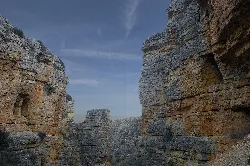
View of the Roman aqueduct in Gea de Albarracín with rock formations.
Gea de AlbarracínTeruel

How can I explore the Acueducto Romano in Gea de Albarracín?

The Acueducto Romano is a remarkable structure from the 1st century, showcasing Roman engineering. Visitors can explore several adapted sections along its route, which include interpretive tables detailing its construction. The site is accessible for hiking, allowing for a closer look at its historical significance and scenic surroundings.

Acueducto Romano For visitors ›

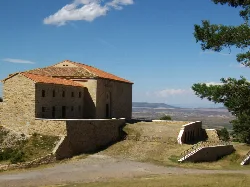
Sanctuary of the Virgin of Tremedal in Orihuela del Tremedal, with landscape and blue sky.
Orihuela del TremedalTeruel

What is the Santuario de la Virgen del Tremedal?

The Santuario de la Virgen del Tremedal is a significant pilgrimage center located on the northern slope of Alto del Tremedal, at an altitude of 1770 m. It offers panoramic views of the Sierra de Albarracín and is known as 'El Balcón de España.' The sanctuary was rebuilt in 1880 after being destroyed during the War of Independence and features a rich architectural design with three naves and a stunning altar.

Santuario de la Virgen del Tremedal For visitors ›

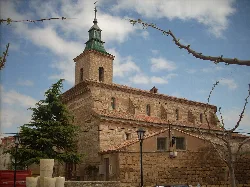
Stone church with tower and red tiled roof in Fuentes Claras.
Fuentes ClarasTeruel

What is the Iglesia Parroquial de Fuentes Claras like?

The Iglesia Parroquial de Fuentes Claras is a notable landmark in the town, characterized by its robust stone construction and baroque architectural style. The church features a bell tower and is located near the Plaza de la Concordia, making it a central point for both residents and visitors. Its historical significance adds to the charm of Fuentes Claras, reflecting the town's rich cultural heritage.

Iglesia Parroquial de Fuentes Claras For visitors ›

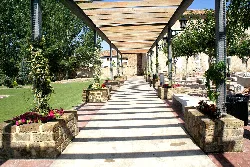
Covered walkway in Concordia Square, Fuentes Claras, with flower pots.
Fuentes ClarasTeruel

What can you tell me about the Plaza de la Concordia?

The Plaza de la Concordia is a beautifully landscaped area in Fuentes Claras, surrounded by significant buildings such as the parish church and Casa Grande. It serves as a communal space for residents and hosts various local events. The plaza's design includes gardens and seating areas, making it a pleasant place to relax and socialize.

Plaza de la Concordia For visitors ›

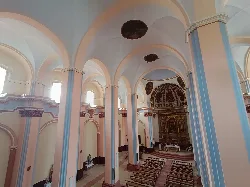
View of the interior of a church with arches, columns, and benches.
Martín del RíoTeruel

What can you tell me about the Church of the Assumption of Our Lady in Martín del Río?

The Church of the Assumption of Our Lady is a significant architectural landmark in Martín del Río, built in the first half of the 18th century. Designed in Baroque style, it features a basilica plan. The church suffered damage during the Spanish Civil War, leading to the collapse of its dome in the 1950s. Restoration began in the late 1970s, and it now symbolizes the community's historical and cultural heritage.

Church of the Assumption of Our Lady For visitors ›

Martín del RíoTeruel

What is the significance of the Hermitage of Saints Fabian and Sebastian?

The Hermitage of Saints Fabian and Sebastian, built in 1522, is an important religious site in Martín del Río. Known for its Baroque architecture and Rococo-style paintings, it features a distinctive tower considered one of the finest examples of late Mudéjar style in Teruel. It hosts local pilgrimages and community events throughout the year.

Hermitage of Saints Fabian and Sebastian For visitors ›

La Iglesuela del CidTeruel

What are the main attractions in La Iglesuela del Cid?

Key attractions in La Iglesuela del Cid include the historic center, which is a declared cultural heritage site, the Church of La Purificación, and the Sanctuary of the Virgen del Cid. The town also features various historical buildings, including the Ayuntamiento and the Portal de San Pablo, showcasing its medieval architecture.

For visitors ›

La Iglesuela del CidTeruel

What is the significance of the Sanctuary of the Virgen del Cid?

The Sanctuary of the Virgen del Cid is a notable pilgrimage site dedicated to the Virgin Mary. It was built in 1546 and is linked to a miraculous event from the Middle Ages. The sanctuary houses a well-preserved image of the Virgin, believed to have been visited by the Cid Campeador.

Sanctuary of the Virgen del Cid For visitors ›

La Iglesuela del CidTeruel

What is the architectural style of the Church of La Purificación?

The Church of La Purificación features a mix of architectural styles, primarily Baroque, built in the 17th century over an earlier Gothic structure. It showcases a beautifully crafted façade with a plateresque portal and a tower with three square bodies, reflecting the town's historical significance.

Church of La Purificación For visitors ›

La Iglesuela del CidTeruel

What is the significance of the Portal de San Pablo?

The Portal de San Pablo is an ancient arch from the town's medieval wall, repurposed for religious use. It features a niche with an image of the Apostle Paul and is a reminder of the town's historical defenses and its transformation over time.

Portal de San Pablo For visitors ›

Ojos NegrosTeruel

What are the main sights to see in Ojos Negros?

Key sights in Ojos Negros include the ruins of its medieval castle, the church of Nuestra Señora del Pilar, and the windmill dating back to the 16th century. Additionally, the Salinas del Rey and the historical locomotives from the mining era are notable attractions, reflecting the town's rich industrial heritage.

For visitors ›

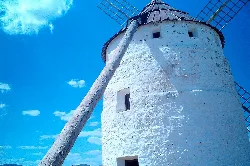
Ojos Negros windmill with blades and white structure.
Ojos NegrosTeruel

What is the story behind the windmill in Ojos Negros?

The windmill in Ojos Negros dates back to the 16th and 17th centuries. It is a Mediterranean-style mill, restored to preserve its historical significance. The mill played a crucial role in the local agricultural economy, showcasing traditional milling techniques that were once vital for the community.

windmill For visitors ›