Sights

3,246 questions

VillalpardoCuenca

What is the Pino del Llanillo?

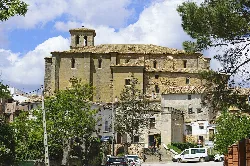
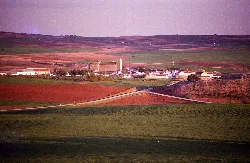
The Pino del Llanillo, a notable Aleppo pine, is distinguished by its height and thick trunk. Located near the rambla leading to the Sitio de Consolación, it offers beautiful views and is a local symbol, featured in the town's coat of arms.
Pino del Llanillo For visitors ›

VillalpardoCuenca

What is the significance of the Santuario de Nuestra Señora de Consolación?

The Santuario de Nuestra Señora de Consolación is a significant religious site located in a lush area known for its natural beauty. It has been a place for rest and recreation, with a history dating back to 1603 when the annual fair began. The sanctuary features a unique architectural style and is surrounded by numerous springs.

Santuario de Nuestra Señora de Consolación For visitors ›

Stone church with bell tower in Buendía, Cuenca.
BuendíaCuenca

What can you tell me about the Iglesia de la Natividad de Ntra. Sra.?

The Iglesia de la Natividad de Ntra. Sra. is a notable church in Buendía, built in the 15th and 16th centuries. It features a striking tower designed by fray Alberto de la Madre de Dios in 1634 and is characterized by its Gothic style, with three naves and impressive columns. The church is a central part of the town's architectural heritage.

Iglesia de la Natividad de Ntra. Sra. For visitors ›

BuendíaCuenca

What historical sites are near Buendía?

Near Buendía, the ancient city of Recopolis, founded by the Visigoth king Leovigildo, is a significant historical site. The remnants of this city can be found in the Sierra de Enmedio, showcasing the area's rich historical layers and archaeological interest, making it a fascinating spot for history enthusiasts.

For visitors ›

Rural landscape with fields and buildings seen from Santa Ana in Tribaldos.
TribaldosCuenca

What is the white building on the hill in the photo?

The white building on the hill in the photo is the hermitage of Santa Ana, located at an altitude of 879 meters. It offers panoramic views of the surrounding landscape and is a notable landmark in Tribaldos, reflecting the village's cultural and historical significance.

hermitage of Santa Ana For visitors ›

Las PedroñerasCuenca

What is Las Pedroñeras known for?

Las Pedroñeras is famously known as the "Capital of Garlic" due to its exceptional garlic production, particularly the Ajo Morado variety. This municipality is the leading exporter of garlic in Spain and has a significant role in the global garlic market.

For visitors ›

Las PedroñerasCuenca

What is the significance of the Pinar and ermita de San Isidro?

The Pinar and ermita de San Isidro are significant for their cultural and religious importance. The annual celebration of San Isidro, the patron saint of farmers, draws many locals to the area for festivities and community gatherings in the beautiful natural setting.

Pinar and ermita de San Isidro For visitors ›

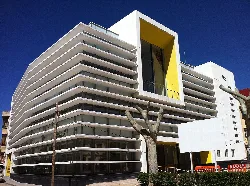
Building with curved white lines and a yellow frame on the facade.
Quintanar del ReyCuenca

What is the Nuevo Ayuntamiento de Quintanar del Rey?

The Nuevo Ayuntamiento de Quintanar del Rey is a modern town hall building constructed between 2010 and 2013. It represents contemporary architecture in the municipality and serves as the administrative center for local governance. Its design is notable for its sleek lines and vibrant colors, making it a distinctive landmark in the town.

Nuevo Ayuntamiento de Quintanar del Rey For visitors ›

Quintanar del ReyCuenca

Are there any notable landmarks in Quintanar del Rey?

Yes, Quintanar del Rey features several notable landmarks, including the church of San Marcos Evangelista, which has a remarkable facade from the 16th century. Additionally, there are four ermitas from the 17th and 18th centuries, with the most significant being the Ermita de la Concepción, located in the town square.

For visitors ›

Quintanar del ReyCuenca

What is the significance of the Ermita de la Concepción?

The Ermita de la Concepción is one of the most important religious sites in Quintanar del Rey. Located in the town square, it features a unique architectural design and serves as a focal point for community events and religious celebrations, particularly during the local patronal festivities.

Ermita de la Concepción For visitors ›

IniestaCuenca

Are there any museums in Iniesta?

Yes, Iniesta has several museums, including the Museo Local, which showcases ethnographic and traditional artifacts, and the Museo Arqueológico, located in the former Ermita de la Concepción. The latter specializes in Iberian archaeological finds, including a notable mosaic from the 5th century BC.

For visitors ›

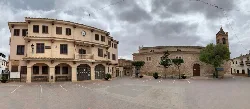
Square in Casas de Fernando Alonso with town hall and church.
Casas de Fernando AlonsoCuenca

What can I see in the Plaza de España in Casas de Fernando Alonso?

In the Plaza de España, you can see the town hall on the left and the Church of the Most Pure Conception in the center. This area serves as a focal point for the community and is a great spot to appreciate the local architecture and ambiance.

For visitors ›

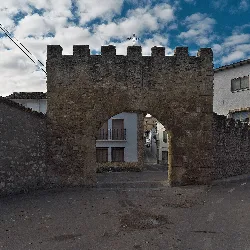
Stone gate with arch and battlements in Uclés, Cuenca.
UclésCuenca

What is the significance of the Puerta del Agua in Uclés?

The Puerta del Agua is a notable historical gate that reflects Uclés' fortified past. It was part of the significant defensive walls that protected the town. This structure serves as a reminder of the town's strategic importance during various historical periods, particularly during the Reconquista.

Puerta del Agua For visitors ›

UclésCuenca

What are the main architectural styles in Uclés?

Uclés features a mix of architectural styles, prominently including Renaissance elements seen in the Monasterio de Uclés. The remnants of the castle showcase medieval military architecture, while the Puerta del Agua represents defensive structures from earlier periods, illustrating the town's historical evolution.

For visitors ›

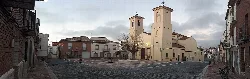
Main square with church and houses in Zarza de Tajo.
Zarza de TajoCuenca

What can you tell me about the Plaza Mayor in Zarza de Tajo?

The Plaza Mayor is a central gathering place in Zarza de Tajo, reflecting the town's community spirit. It features notable architecture and serves as a venue for local events and celebrations, making it an important social hub for residents and visitors alike.

For visitors ›

Zarza de TajoCuenca

What is the Ermita de San Isidro Labrador?

The Ermita de San Isidro Labrador is a newly constructed chapel in Zarza de Tajo, dedicated to the patron saint of farmers. It hosts important events, including the procession on Palm Sunday and the celebration of San Isidro on May 15, highlighting its role in local traditions.

For visitors ›

Houses and a church in Olmeda del Rey, Cuenca.
Olmeda del ReyCuenca

What is the general layout of Olmeda del Rey?

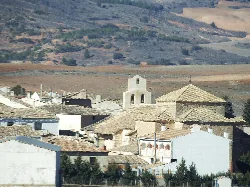
Olmeda del Rey is characterized by its horseshoe-shaped layout, nestled at the foot of a small hill. This unique design is believed to be influenced by the presence of an ancient castle, although some sources suggest the fortification may have been located on a nearby hill instead.

For visitors ›

Olmeda del ReyCuenca

What is the significance of the Fuente del Chorrillo?

The Fuente del Chorrillo is a notable landmark in Olmeda del Rey, possibly constructed by the same architect as the local church. Some sources suggest it may have Roman origins, adding to its historical intrigue. This fountain is located on the outskirts of the town and has been the subject of various speculations regarding its past.

Fuente del Chorrillo For visitors ›

Town hall building with clock and balcony in Olmeda del Rey.
Olmeda del ReyCuenca

What is the Ayuntamiento de Olmeda del Rey like?

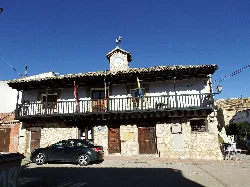
The Ayuntamiento de Olmeda del Rey, or town hall, is a typical 17th-century structure that reflects the architectural style of the period. It serves as the administrative center for the municipality and is an important part of the town's heritage, located prominently in the village square.

Ayuntamiento de Olmeda del Rey For visitors ›

Stone fountain with trough and washbasin in Vellisca, Cuenca, surrounded by trees and an old lamp post.
VelliscaCuenca

What is the Fuente de Vellisca?

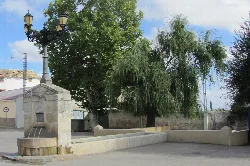
The Fuente de Vellisca is a stone fountain built in 1874, featuring three spouts. It has historically provided water to the village and includes a wash area and a trough for livestock, showcasing the town's agricultural heritage.

Fuente de Vellisca For visitors ›

Urban art mural with jars and wall decorations in El Provencio.
El ProvencioCuenca

What is the Ruta de Arte Urbano in El Provencio?

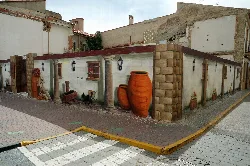
The Ruta de Arte Urbano is a vibrant project that features over 50 murals throughout El Provencio, inspired by the local Feria Internacional del Cómic. This initiative, in collaboration with the Asociación Mancha Colors, enhances the town's cultural landscape and has gained recognition as one of Spain's significant urban art routes. Each mural reflects themes from the comic world, adding color and creativity to the town.

Ruta de Arte Urbano For visitors ›

TalayuelasCuenca

What are the main sights to see in Talayuelas?

In Talayuelas, visitors can explore the Iglesia de la Asunción, a 17th-century church, and the Ermita de San Antonio, also from the same period. The Plaza de Murillo is charming, especially during the cultural week in August when it's adorned with flowers. Additionally, the Cañón de Talayuelas offers stunning geological formations and panoramic views, making it a must-visit for nature lovers.

For visitors ›

TalayuelasCuenca

What is the significance of the Iglesia de la Asunción?

The Iglesia de la Asunción is a notable landmark in Talayuelas, built in the 17th century. Its design features a Latin cross layout, typical of the period. This church not only serves as a place of worship but also reflects the town's historical and architectural heritage, making it an important site for both residents and visitors.

Iglesia de la Asunción For visitors ›

Main square with clock, lampposts, and stone buildings in Mota del Cuervo.
Mota del CuervoCuenca

What can I see at Plaza Mayor de Mota del Cuervo?

Plaza Mayor de Mota del Cuervo is a central gathering place featuring charming architecture and a clock tower. It's an ideal spot to experience local life and culture. The square often hosts community events and festivities, making it a lively hub for both residents and visitors. Enjoy a stroll or relax at one of the nearby cafes while soaking in the atmosphere.

Plaza Mayor de Mota del Cuervo For visitors ›